

A bedroom should help you unwind the moment you walk in, not just look good in a photo. These cozy bedroom ideas focus on that feeling: soft layers you can actually sleep under, lighting that stays low in the evening, and textures that make a room feel settled rather than styled for a single day. You do not need a remodel or a matching set of new furniture to get there. Many of the changes below are weekend projects, like swapping bedding, adding a rug, or moving a chair into a sunny corner. Others, such as a warmer paint color or a wood headboard, are worth saving for when you are ready for a bigger update. Pick one idea that solves your biggest annoyance — cold floors, harsh light, a bare wall — and start there. The rest can follow slowly, one comfortable layer at a time.
1. Layer the Bed With Warm, Breathable Bedding
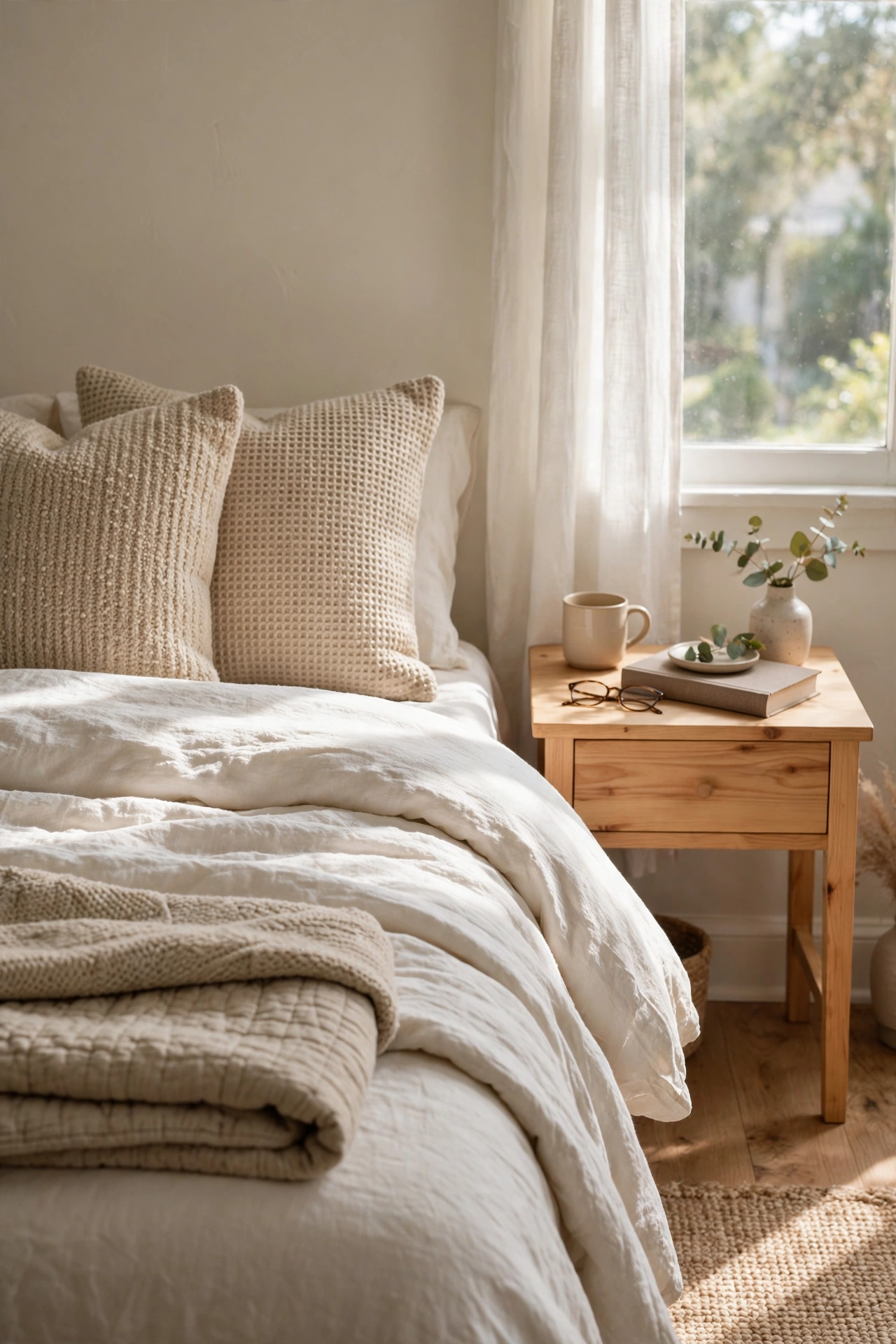
A calm bedroom usually starts with the bed, because it takes up the most visual space and the most physical contact. Instead of one heavy comforter, build in layers you can adjust through the night: a fitted sheet, a light cotton or linen duvet, and a thinner quilt folded across the lower third of the bed. That way the bed looks finished without feeling weighed down, and it is easy to push a layer aside on a warm night.
Keep the palette close together rather than perfectly matched. Warm white, oatmeal, soft taupe, and a muted sage or dusty blue tend to sit quietly together, especially when the textures differ. A washed linen duvet cover, a cotton quilt with a little stitching detail, and two sleeping pillows plus two slightly firmer Euro pillows give enough structure without turning the bed into a display you are afraid to use.
Quick Tip: If the bed still looks flat, add just one textured pillow — a nubby boucle or chunky knit — rather than five decorative ones you have to move every night.
2. Switch to Low, Warm Evening Lighting
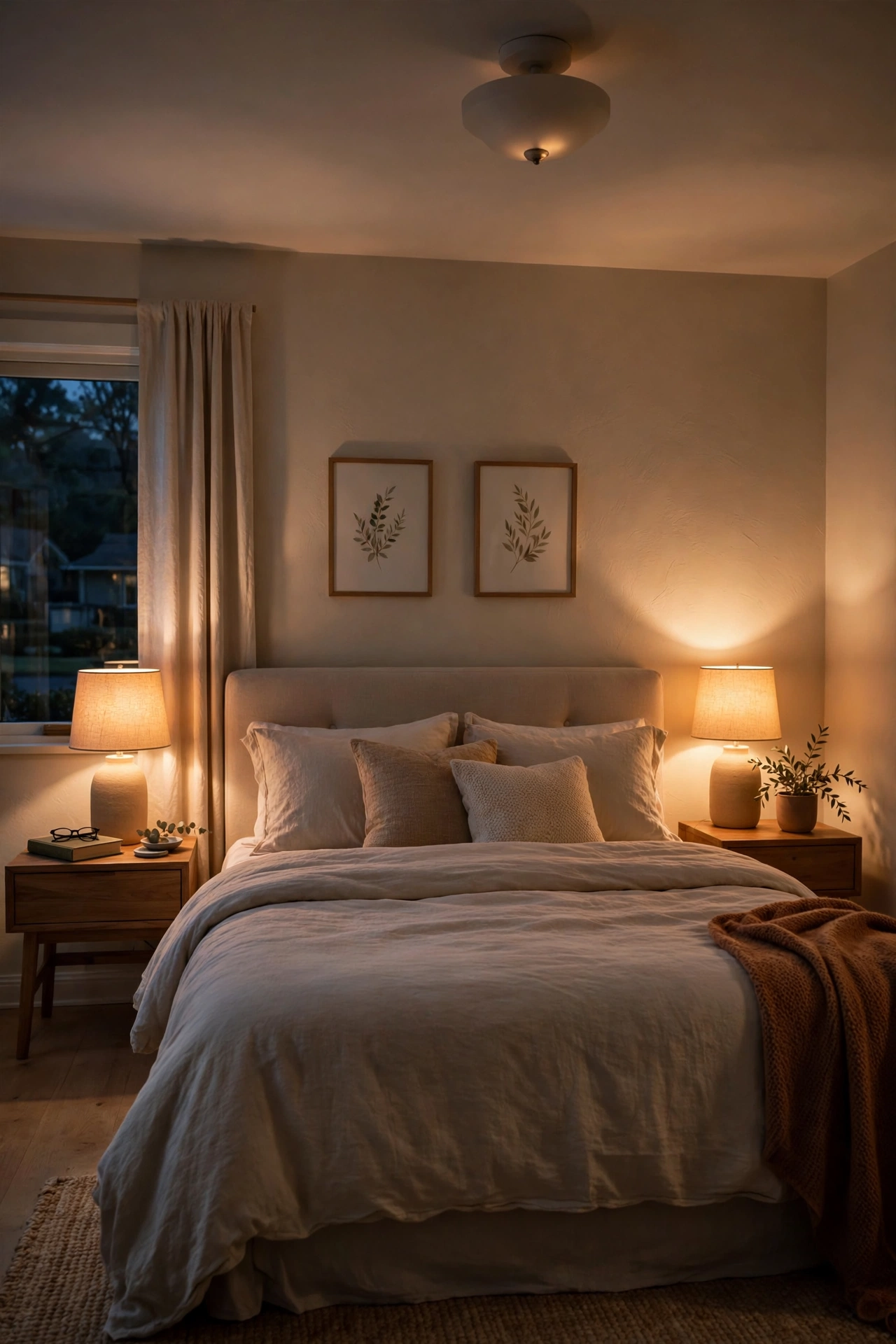
Overhead lighting is often the reason a bedroom feels more like an office than a retreat. Cozy rooms usually rely on several smaller, warmer light sources instead of one bright ceiling fixture. Two bedside lamps with warm-toned bulbs, a small lamp on a dresser, and a dimmer on the main light let you lower the room gradually as the evening goes on.
Pay attention to scale. A lamp that is too tall next to a low headboard throws light in the wrong place, while a tiny lamp on a wide dresser can look lost. As a practical guide, the bottom of a bedside shade should sit roughly at shoulder height when you are sitting up in bed, so reading light falls on the page rather than in your eyes.
| Light source | What it does best | Good placement |
| Bedside lamp | Reading and winding down | On each nightstand, or one side in a small room |
| Dresser lamp | Soft background glow | Away from the bed, near a mirror or art |
| Dimmable ceiling light | General light when getting dressed | On a dimmer, used low in the evening |
3. Make a Small Reading Corner, Even in a Tight Room
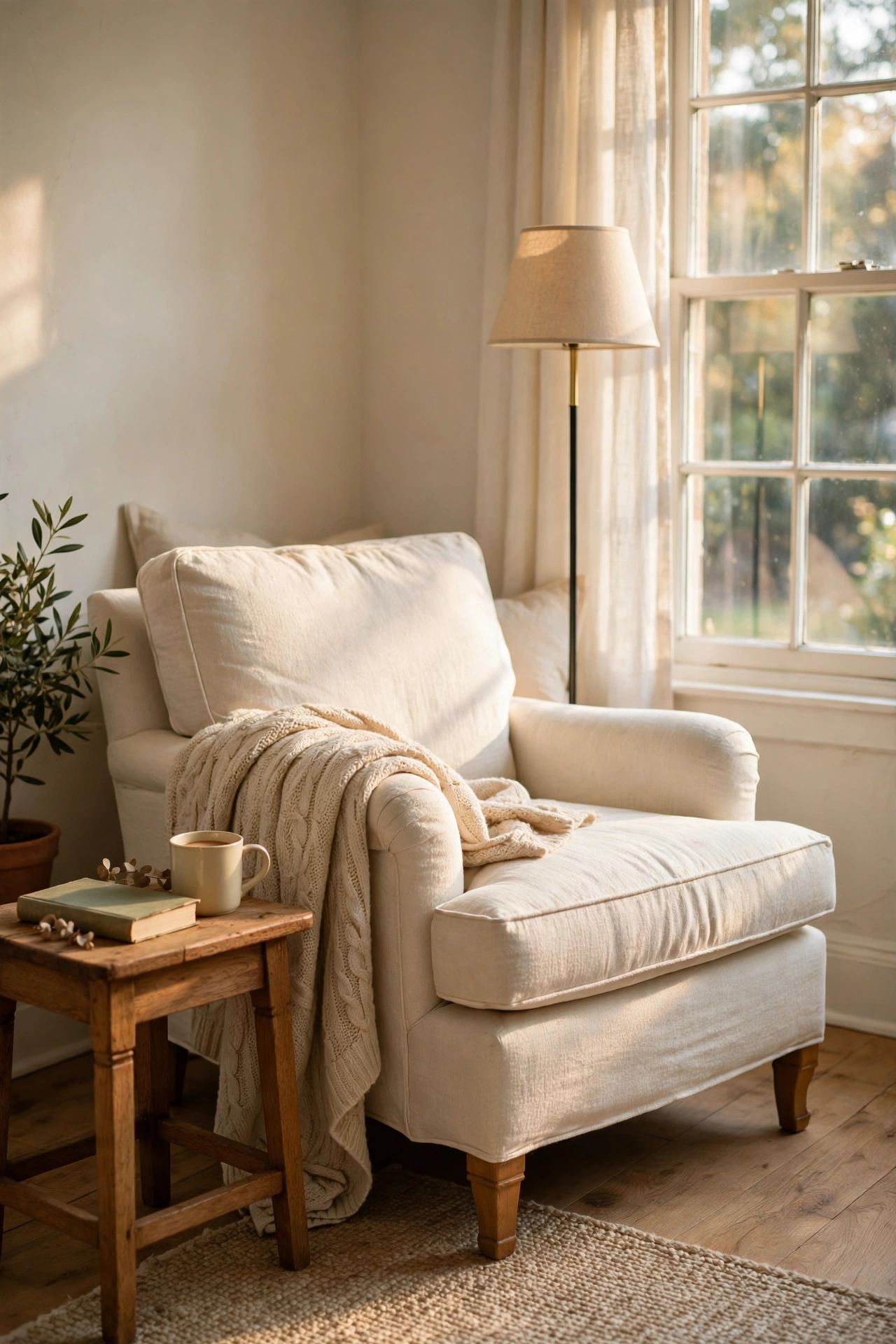
A reading corner does not need a separate alcove. It needs one comfortable chair, decent light, and a place to set a cup down. In a smaller American bedroom, that can be a compact upholstered armchair angled into a corner, a floor lamp behind one shoulder, and a small side table or a stack of books that doubles as one. The angle matters: turning the chair slightly toward the room, rather than flat against the wall, makes the corner feel intentional instead of like leftover space.
Choose a chair you would actually sit in for half an hour. A low, deep seat with a lumbar pillow works better than a stiff accent chair that only looks good. If floor space is tight, a chair with slim wooden legs keeps the room feeling open underneath, and a throw draped over one arm adds softness without needing extra furniture.
4. Anchor the Room With a Plush Rug That Extends Past the Bed
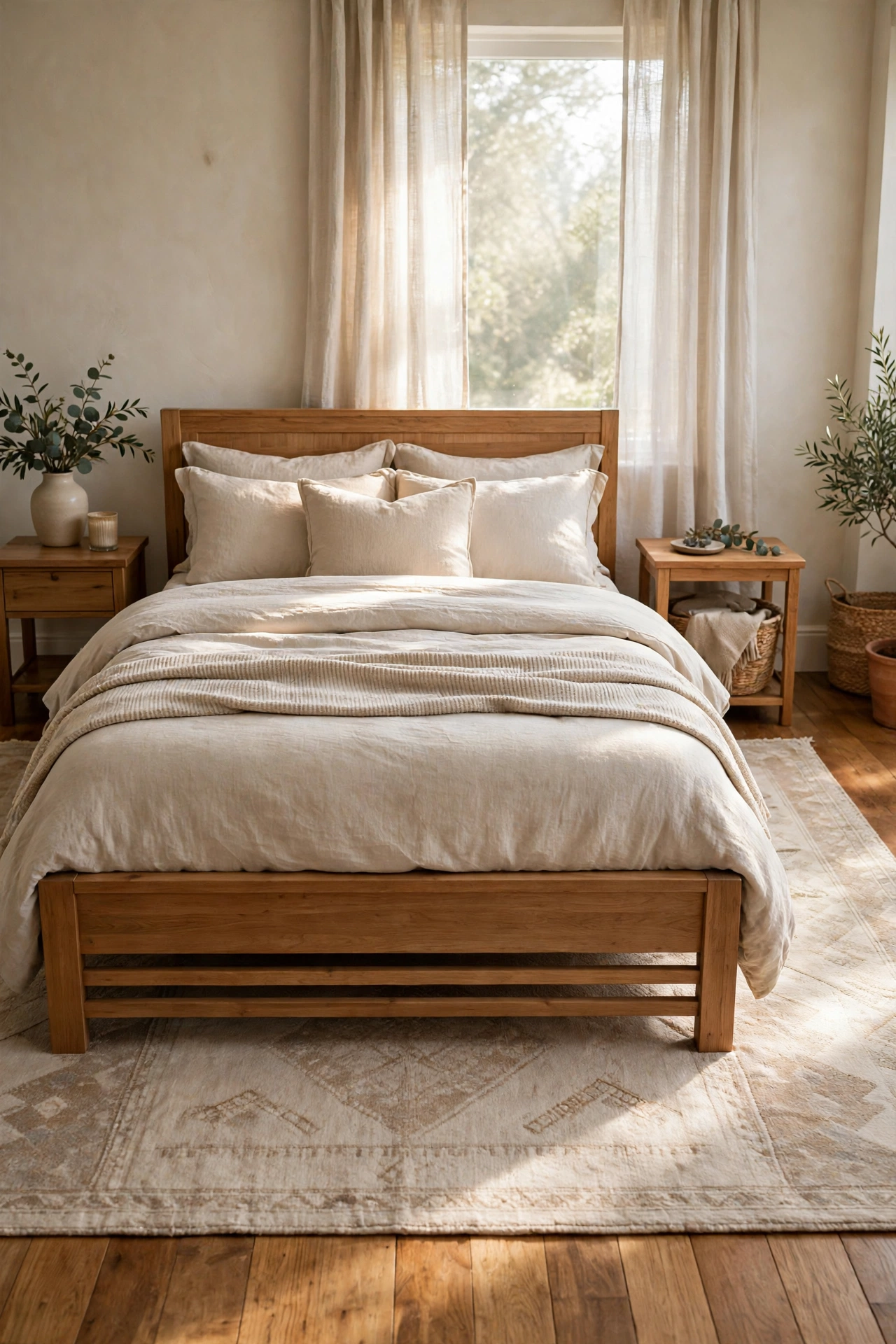
Bare floors can make even a well-decorated bedroom feel cold first thing in the morning. A rug that extends well beyond the sides and foot of the bed changes that immediately, both underfoot and visually. It grounds the bed, softens sound, and connects the nightstands to the rest of the room instead of leaving them floating on hard flooring.
Size is the detail most people get wrong. A rug that only peeks out a few inches looks like an afterthought. In practice, aim for at least 18 to 24 inches of rug on each side of the bed where you step down, and enough length to reach past the foot. A low-pile wool rug is easier to clean and vacuum than a very deep shag, while a plush, high-pile rug feels softer but shows footprints more readily — a reasonable trade-off to decide before buying, not after.
- Queen bed: a large rectangular rug placed under the lower two-thirds of the bed usually works well.
- King bed: go wider rather than longer, so both sides have equal soft landing space.
- Small room: a rug that stops just short of the walls keeps the floor pattern from closing the room in.
- Renters: a rug plus a thin pad can warm up a room without changing the flooring at all.
5. Layer Curtains for Darkness, Softness, and Privacy
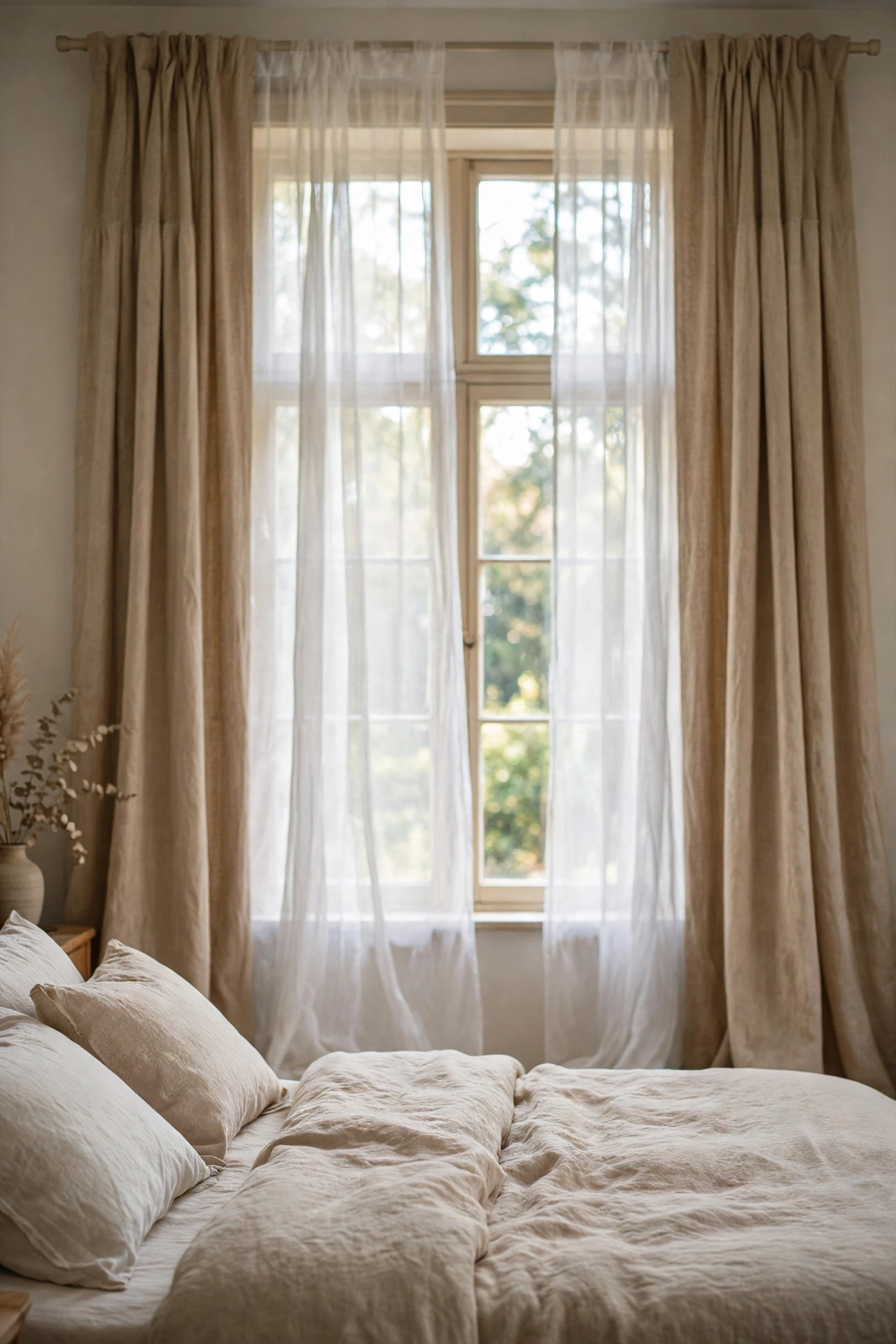
One set of thin curtains rarely does everything a bedroom needs. A layered window treatment — a sheer or light linen panel closest to the glass, plus a heavier blackout or lined panel on the outside — gives you daytime softness and a darker room at night. During the day, the sheer diffuses harsh sun; at night, the heavier panel helps block streetlight and early morning light.
Hang the rod wider and higher than the window frame when you can. Extending it 6 to 10 inches past each side and a few inches above the trim lets the panels stack on the wall rather than covering glass, so the window still looks generous when the curtains are open. That one change often makes a small bedroom feel taller, and it costs nothing beyond a longer rod.
Common Mistake: Curtains that just touch the sill or stop mid-wall, which can make the room feel unfinished.
Better Approach: Let full-length panels fall to just above the floor, or pool very slightly if the fabric is heavy and the room is not a high-traffic path.
6. Choose a Natural Wood Headboard as a Warm Focal Point
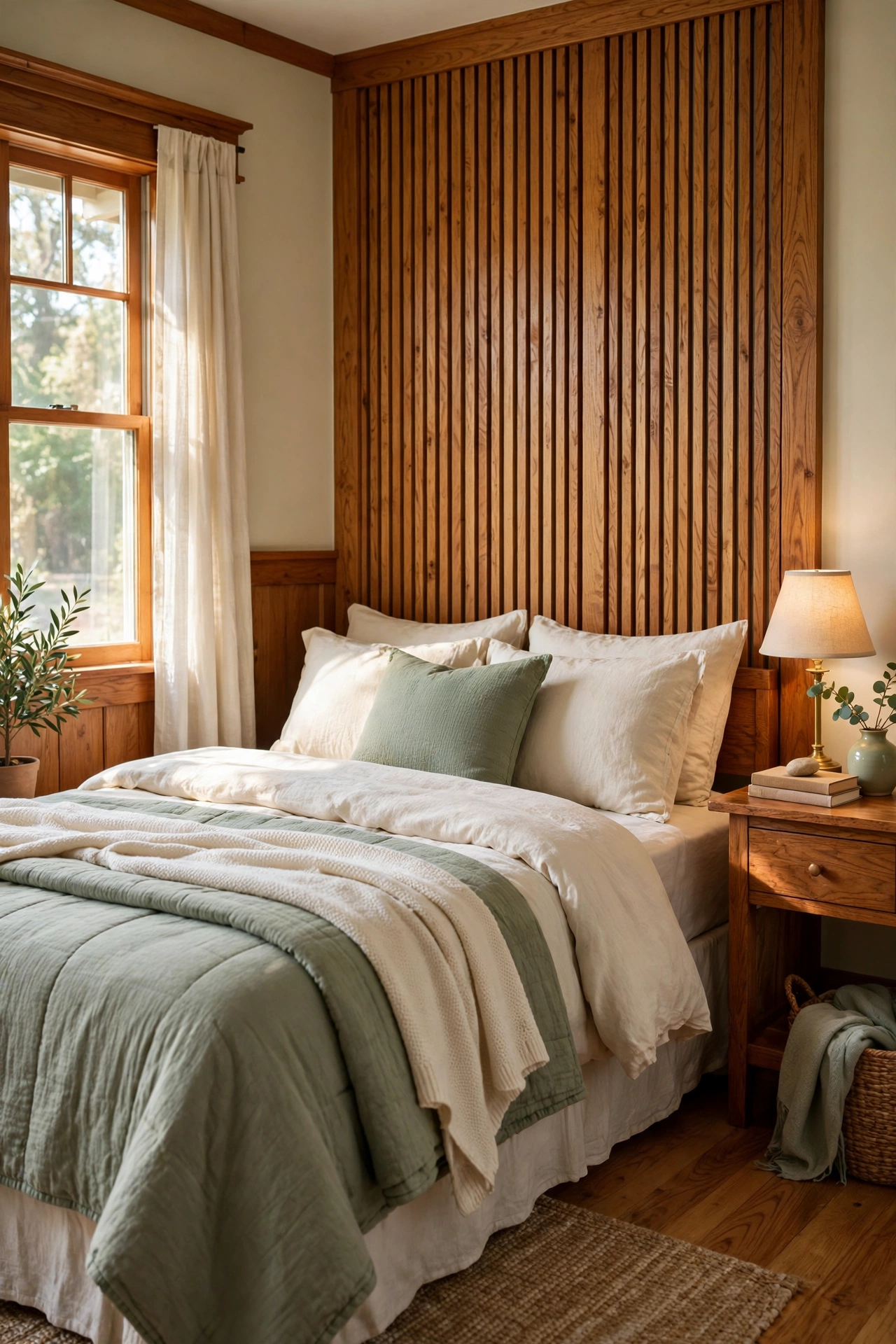
If the wall behind the bed feels blank, a wood headboard can add warmth without adding clutter. Natural oak, walnut, or a lighter whitewashed pine each change the mood: oak reads warm and classic, walnut feels deeper and more formal, and pale wood keeps a small room feeling bright. A simple slatted or panel design tends to age better than an overly ornate shape, and it leaves room for bedding and art to do the rest of the work.
Height matters more than decoration. A headboard that ends just below where your shoulders rest when sitting up will not support reading comfortably, while one that rises too high in a room with low ceilings can crowd the wall. Measure from the top of the mattress, not the floor, and leave enough wall above for breathing room or a single piece of art if you want it.
7. Paint the Walls a Muted, Restful Color
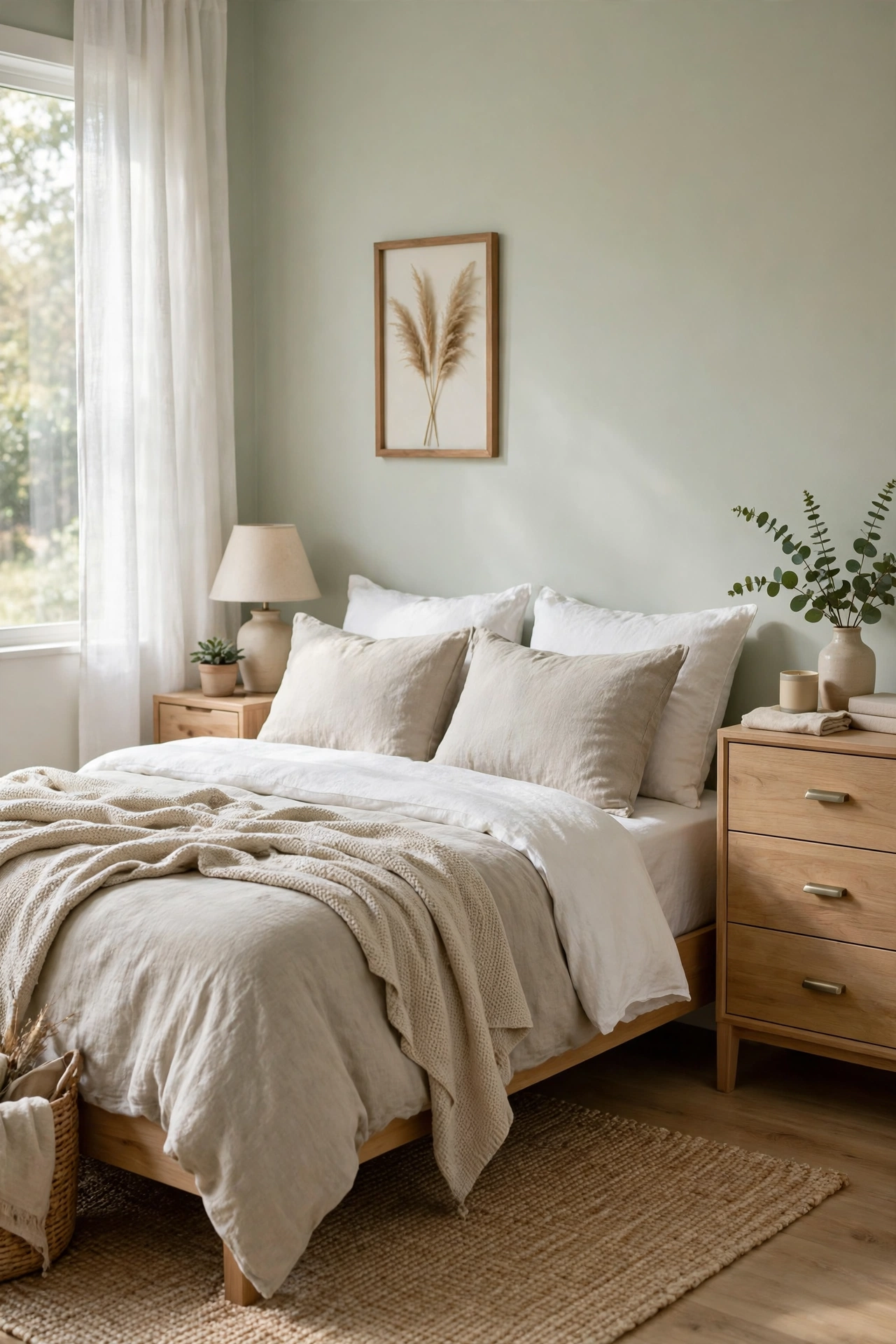
Paint is one of the few changes that affects the whole room at once, and a muted color often does more for calm than a bold accent wall. Warm white, soft greige, pale sage, and dusty blue-green are popular in American bedrooms because they stay gentle in both morning light and lamplight, and they do not compete with bedding or wood tones.
Before committing, test properly:
- Paint two large swatches on different walls, not just one small square.
- Look at them in morning light, afternoon light, and with the lamps on at night.
- Live with them for at least a couple of days before buying full gallons.
That sequence saves more repainting than any color chart can. Also keep the finish in mind: a matte or eggshell finish hides small wall imperfections better than a shinier finish, which is useful in older homes.
8. Keep a Basket of Throws Within Reach of the Bed
A basket of throws is a small idea with an outsized effect, because it makes comfort easy rather than staged. Place a large woven basket at the foot of the bed or beside a chair, and fill it with two or three throws in different weights: a light cotton throw for summer evenings, a chunky knit for cold nights, and perhaps a fleece one for reading. When a throw is folded loosely rather than arranged perfectly, the room looks lived in and inviting.
This also solves a practical problem. Extra blankets stored in a closet tend to stay there; throws in an open basket actually get used. Choose a basket with handles if you move it for vacuuming, and keep the palette in the same family as the bedding so the basket reads as part of the room, not as storage that wandered in.

9. Add Low-Light Greenery That Can Actually Survive a Bedroom
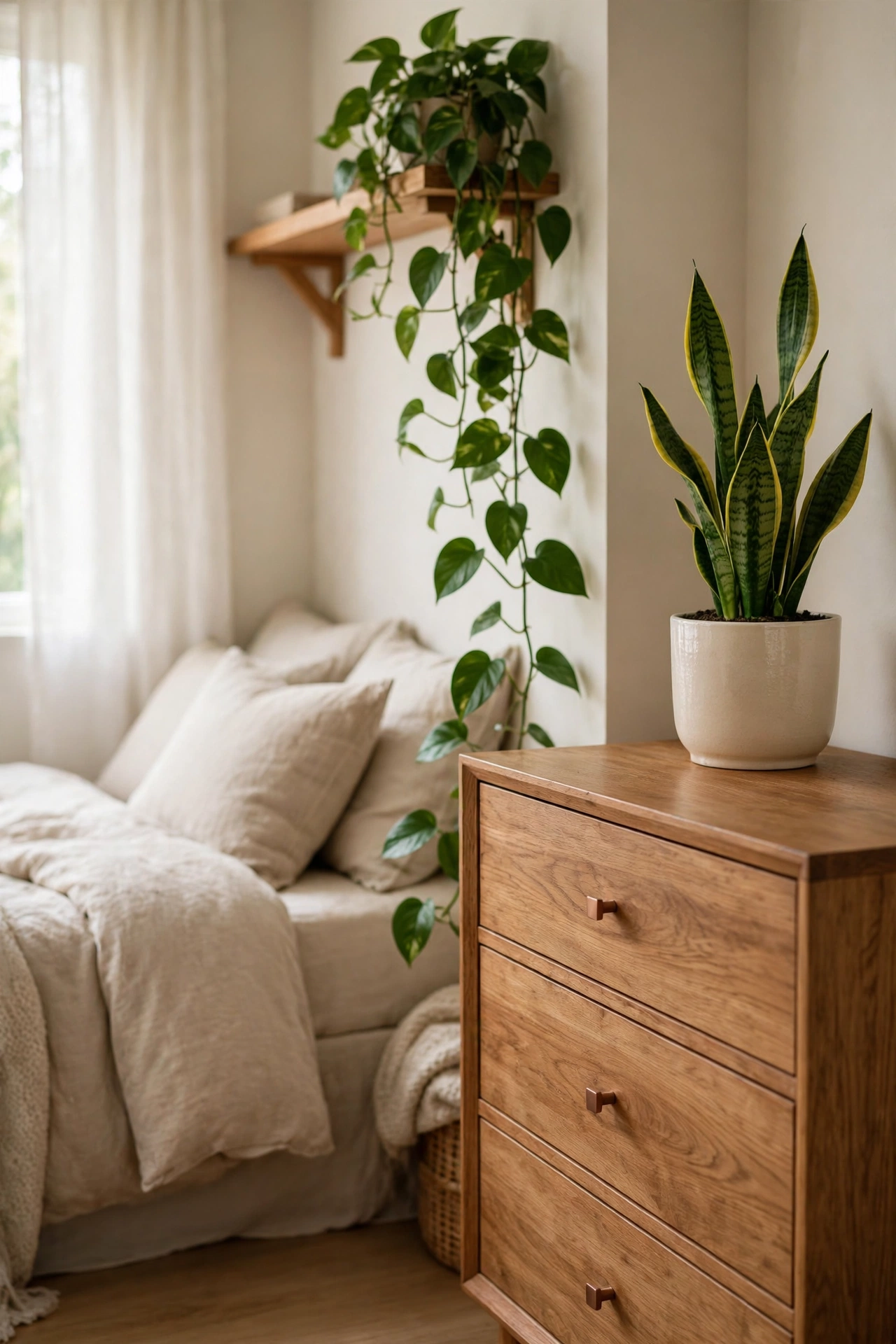
Plants soften the straight lines of a bed, dresser, and closet doors, but a bedroom is not a greenhouse. Low and indirect light, plus irregular watering, suit plants like pothos, snake plants, and ZZ plants better than sun-hungry varieties. A trailing pothos on top of a dresser, a snake plant in a plain ceramic pot beside a nightstand, or a small ZZ plant on a bookshelf adds life without demanding daily attention.
Keep the styling restrained. One or two plants in simple pots usually feel calmer than a crowded collection on every surface, especially in a room meant for sleep. From a practical standpoint, check drainage before placing a pot on wood furniture, and keep trailing vines away from lamp cords and bedding so they do not become a nightly tangle.
Editor’s Note: If a room gets almost no natural light, a realistic faux plant in a good pot is a better choice than a real plant that slowly declines — the visual calm is the same, without the maintenance worry.
10. Keep the Nightstand Calm and Closed Storage Close By
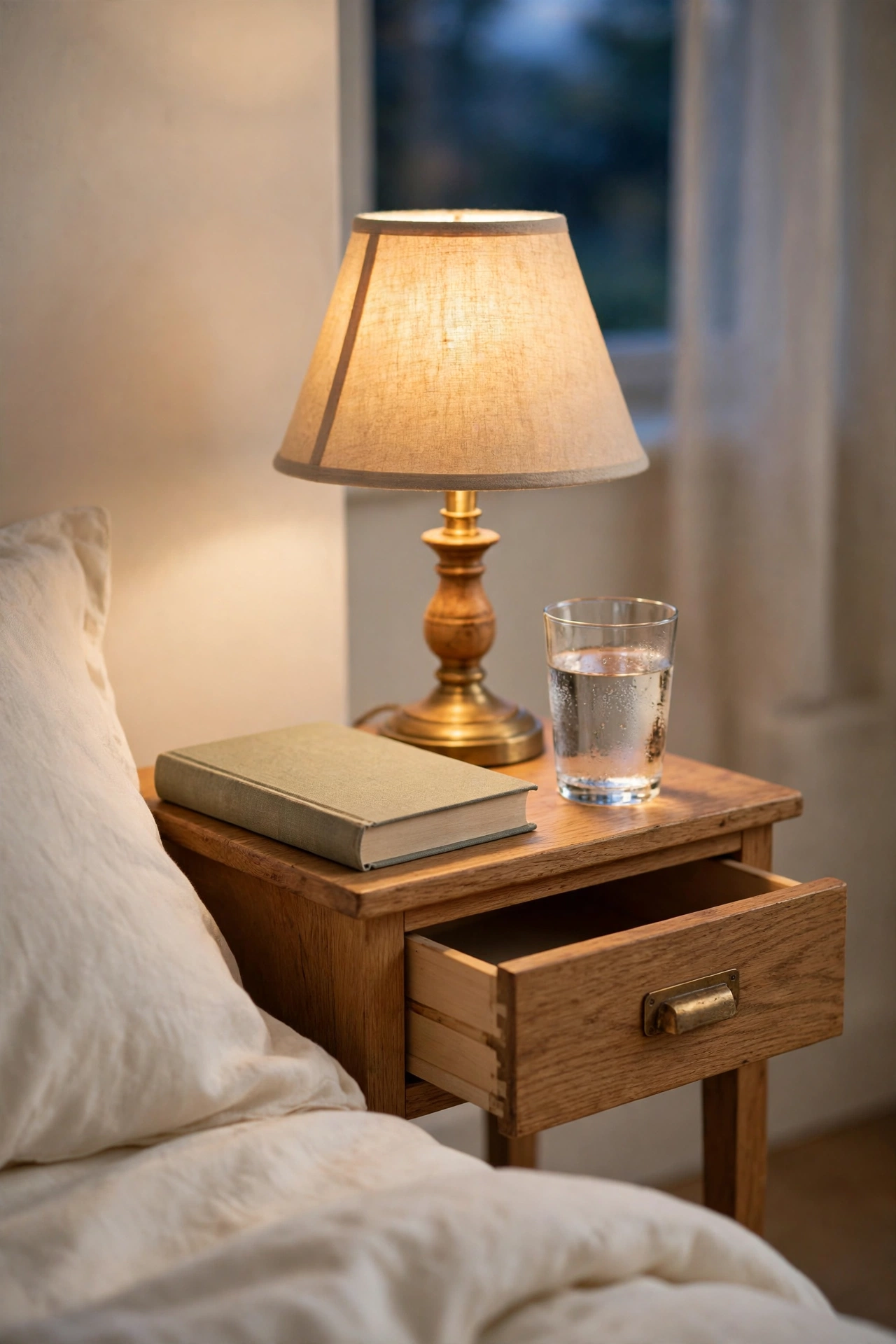
A nightstand covered in chargers, books, water glasses, and half-finished projects can undo an otherwise peaceful room, because it is the last thing you see at night and the first thing you see in the morning. The fix is less about buying new furniture and more about giving everything a place: a small tray for a phone and lip balm, a drawer or lidded basket for chargers and notebooks, and one book instead of a stack.
For larger clutter, a dresser with closed drawers or a storage bench does quieter work than open shelving, which needs constant editing to look calm. If you prefer open storage, use matching baskets so the contents are hidden even when the shelf is visible. The goal is not a bare room — it is a room where the eye can rest.
- On the nightstand: lamp, water, one book, phone tray.
- In the drawer or basket: chargers, extra remotes, notebooks, hand cream.
- Elsewhere: laundry, work papers, and anything that belongs in another room.
11. Hang Calm Landscape Art Instead of a Busy Gallery Wall
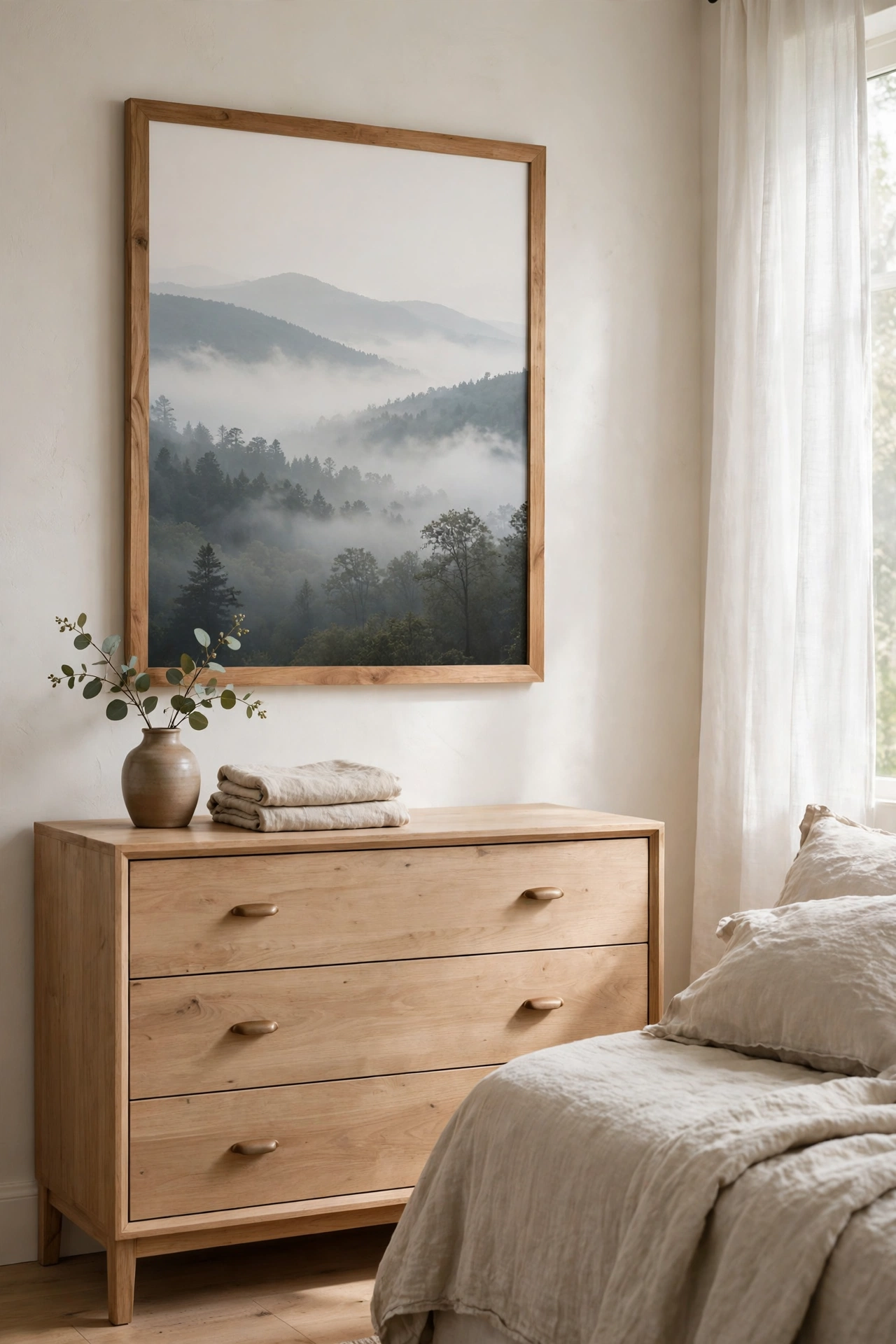
A full gallery wall can be wonderful in a living room, but in a bedroom it often adds visual noise exactly where you want quiet. A single large landscape print, or a pair of matching prints above a dresser, gives the eye a place to rest. Soft hills, a misty field, a quiet coastline, or an abstract wash in muted greens and blues tends to suit a restful room better than high-contrast graphic prints or a grid of small, unrelated frames.
Scale is the deciding factor. Art hung above a dresser should be roughly two-thirds the width of the furniture below it, and art above a bed should not extend wider than the headboard. Hang it at eye level when standing, not so high that it floats near the ceiling, and leave a little wall space around it so the image can breathe.
12. Drape a Sheer Canopy for a Cocoon-Like Bed
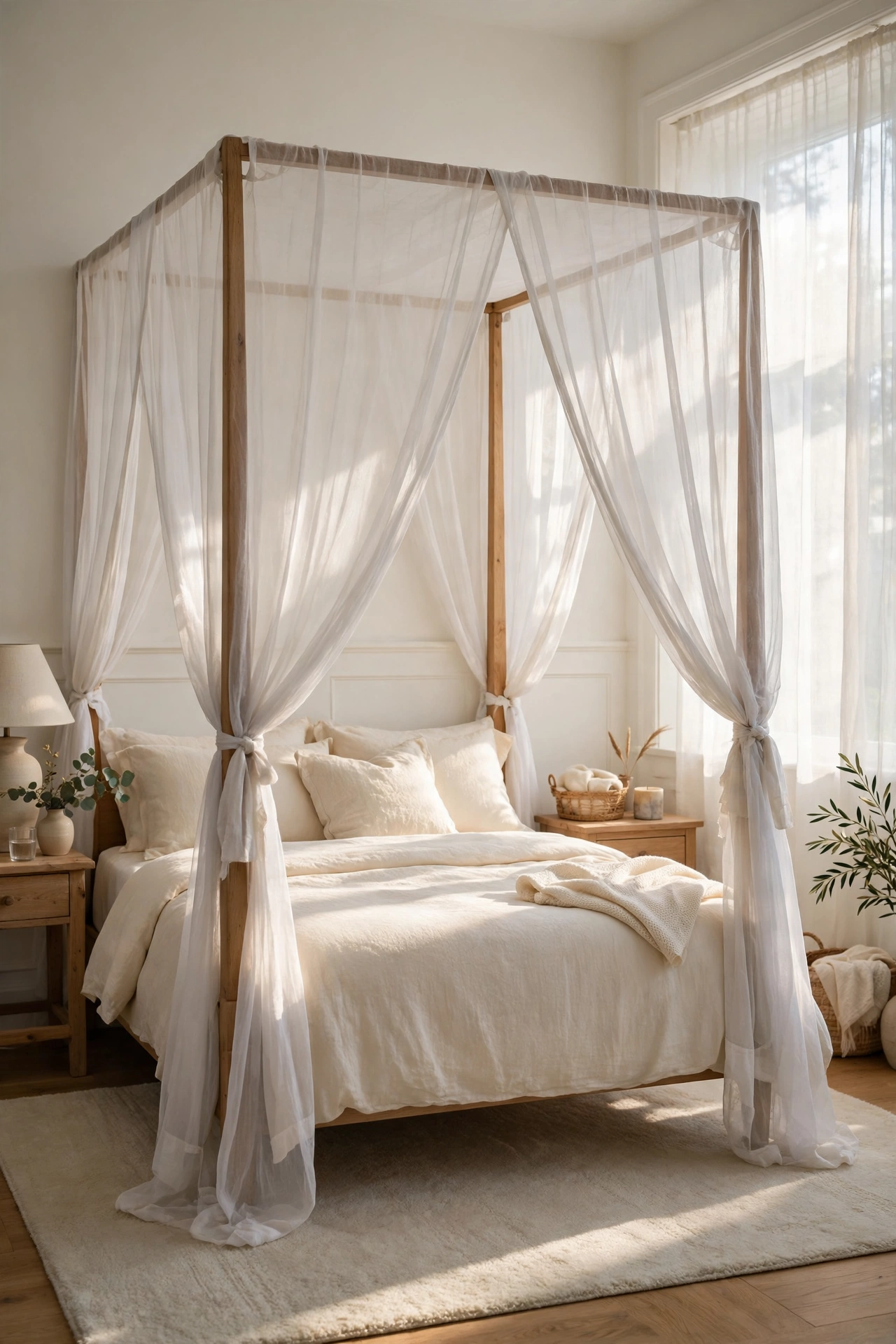
A sheer canopy is not only for large or romantic bedrooms. In a regular American bedroom, lightweight voile panels hung from a simple ceiling-mounted frame or a four-poster bed soften the space around the bed and create a sense of enclosure without blocking light or air. The effect is closer to a quiet tent than a heavy drape, which is why it works even in smaller rooms if the fabric stays pale and thin.
Installation is simpler than it looks: a ceiling track or a lightweight canopy frame, panels that fall to just above the floor, and ties to pull the fabric back during the day. Keep the fabric away from lamps and heaters, and choose washable voile so the canopy can be laundered rather than becoming a dust collector. In a rental, a freestanding canopy frame avoids ceiling holes altogether.
13. Add the Glow of an Electric Fireplace or a Styled Mantel
A fireplace instantly signals warmth, but most bedrooms do not have a working one. A compact electric fireplace — either a freestanding stove-style unit or a low media-console style — gives the flicker and glow without venting, chimney work, or real flame maintenance. Place it where you can see it from the bed, keep the mantel styling simple with a mirror or one piece of art above it, and avoid crowding the top with small objects that compete with the glow.
If an electric unit does not fit the budget or the room, a simple mantel shelf with a cluster of candles in glass hurricanes can create a similar focal point, used with the same care as any open flame: away from bedding and curtains, never left unattended, and on a stable surface. The point is the warm focal point, not a large renovation.
Do: Keep the area around the unit clear and let the glow be the main feature.
Don’t: Stack books, blankets, or electronics directly on top of or against a heat-producing unit.

14. Set Up a Bedside Tea-and-Book Ritual Tray
Not every cozy idea needs to change the room. Some just change how the last half hour of the day feels. A small tray on a nightstand or a chair-side table — with a mug, a teapot or insulated cup, a book, and a candle in a safe holder — turns winding down into a small ritual instead of an extra scroll through a phone. The tray keeps the pieces together, protects the furniture from rings, and makes the whole setup easy to move when it is time to sleep.
Choose pieces that are pleasant to use, not just to look at. A heavier mug that stays warm, a book you are genuinely in the middle of, and a candle scent you like in small doses will do more than a perfectly styled tray you never touch. When the tray is not in use, it can hold a small plant or a folded throw, so it does not become another surface that collects clutter.

15. Place an Upholstered Bench at the Foot of the Bed
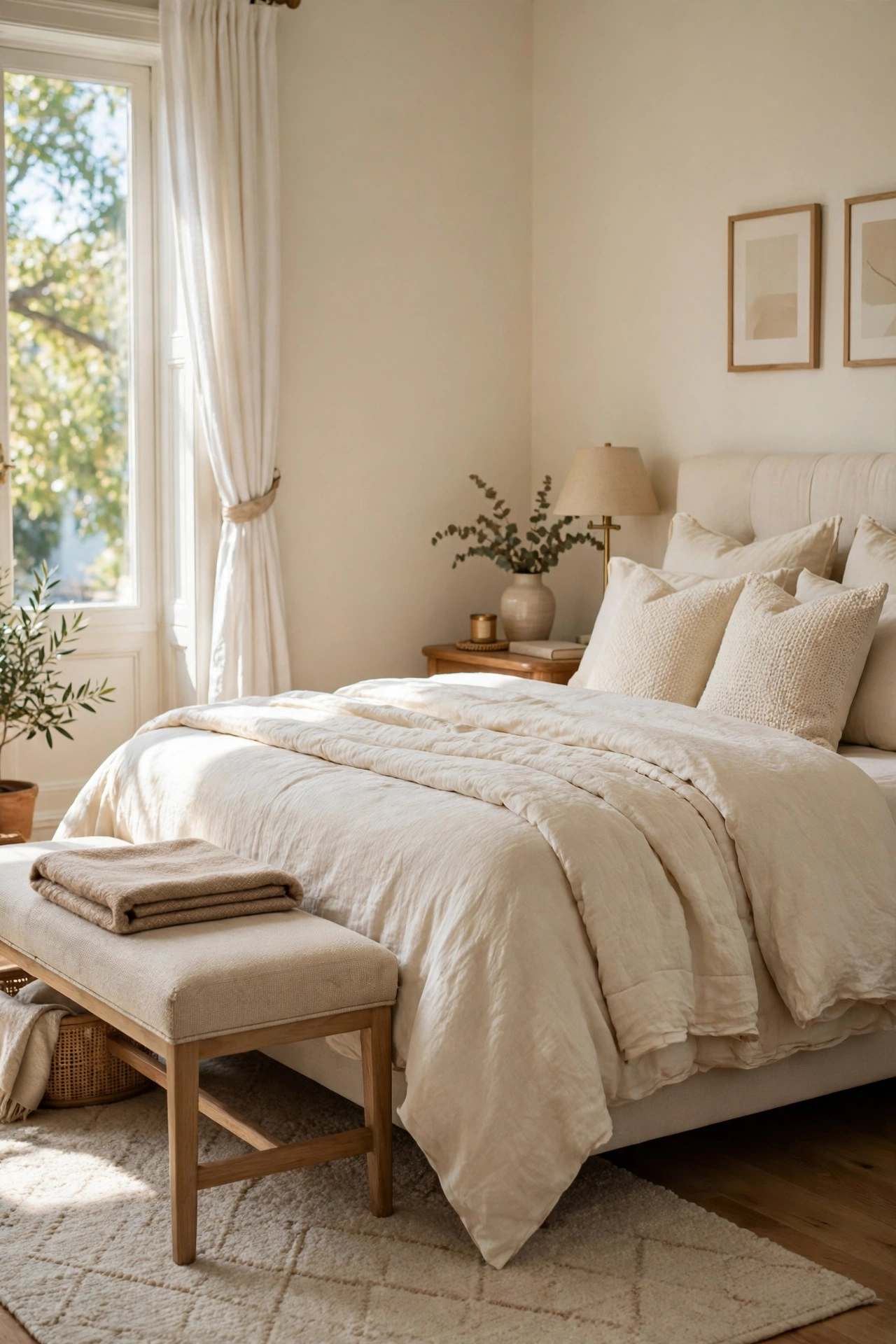
A bench at the foot of the bed finishes a bedroom in a way bedding alone cannot. It gives you a place to sit while putting on shoes, a spot to fold the throw you pushed aside at night, and a visual bridge between the bed and the rest of the room. An upholstered bench in a durable fabric — linen-look, boucle, or a soft velvet in a muted tone — feels softer than a hard wooden bench and is less likely to snag bedding.
Measure before buying. Leave enough walking space at the foot of the bed, usually at least 24 inches to the next piece of furniture or wall, and choose a bench slightly narrower than the bed so it does not overhang awkwardly. In a small room, a bench with open legs keeps the floor visible underneath, while a bench with hidden storage can hold extra blankets if closet space is tight.
Where to Start
If you are not sure which idea to try first, start with the one that affects sleep most directly: layered bedding, darker curtains, or lower evening light. Those three change how the room feels at night, not just how it photographs during the day. After that, add texture where your feet and hands actually land — a rug, a throw basket, a bench — and save paint, a headboard, or a fireplace for a later weekend when you have time to measure and choose well. A calm bedroom is rarely finished in one shopping trip; it is built layer by layer, in the order that makes daily life a little easier.