

A living room doesn’t need a complete renovation to feel fresh, comfortable, and beautifully styled. Sometimes, changing the furniture arrangement, introducing a new color palette, updating the lighting, or layering a few interesting textures can make the entire space feel different. Whether your living room is small and simple or spacious with plenty of room to experiment, thoughtful updates can help create an interior that feels more inviting and pulled together.
These 13 living room refresh ideas explore everything from soft neutral palettes and statement rugs to accent walls, natural materials, modern lighting, and carefully styled accessories. You’ll find attainable decorating changes alongside more elevated design inspiration, making it easier to choose updates that suit your space, personal taste, and budget.
1. Refresh Your Living Room With a Warm Neutral Color Palette

A warm neutral palette is an excellent starting point when your living room feels visually busy or outdated. Instead of relying on several competing colors, bring together shades of cream, warm white, oatmeal, sand, and soft taupe. These tones create a relaxed foundation while allowing furniture, artwork, and decorative accessories to stand out naturally.
Start with the largest surfaces in the room. A warm white wall color, a beige upholstered sofa, or a light neutral rug can establish a cohesive appearance. Then introduce subtle variations through cushions, curtains, wooden furniture, and textured throws.
Elements to incorporate:
- Cream or oatmeal-colored upholstery.
- Natural oak or light walnut furniture.
- Linen curtains with a soft drape.
- Textured cushions in sand and taupe.
- Ceramic accessories in earthy finishes.
Styling Tip: Avoid using exactly the same shade of beige everywhere. Mixing lighter and deeper neutrals creates dimension and prevents the room from looking flat.
2. Introduce a Statement Sofa for an Updated Look

Your sofa usually occupies a significant portion of the living room, making it one of the most influential pieces in the overall design. If the room feels uninspiring, refreshing the main seating area can create a noticeable difference.
Consider moving beyond traditional beige upholstery and exploring a statement sofa in forest green, muted olive, chocolate brown, dusty blue, or deep burgundy. These colors add personality without requiring dramatic changes to the rest of the room.
A curved sofa can introduce softer lines, while a structured silhouette creates a more tailored contemporary appearance. If replacing your existing sofa isn’t practical, consider a new slipcover or professionally reupholstering the piece.
What works particularly well:
- Olive green for an organic, relaxed atmosphere.
- Chocolate brown for warmth and depth.
- Muted blue for a softer contemporary look.
- Burgundy for a richer, more dramatic interior.
Keep surrounding furniture relatively understated so the sofa remains the main focal point.
3. Layer Different Textures for a Cozier Atmosphere

A room can have beautiful furniture and carefully selected colors but still feel unfinished when everything has a similar texture. Layering different materials introduces visual interest and makes the living room feel more comfortable.
Think beyond decorative cushions. Combine soft upholstery with woven baskets, wool rugs, linen curtains, wooden furniture, and handmade ceramics. Each material contributes a different quality to the space.
For example, a smooth leather sofa can look especially inviting when paired with a chunky knit throw and soft fabric cushions. Similarly, a bouclé accent chair can balance the clean lines of a wooden coffee table.
Try combining these materials:
- Bouclé upholstery for softness.
- Wool or cotton rugs for warmth.
- Linen cushions for a relaxed finish.
- Natural wood for organic character.
- Woven baskets for texture and practical storage.
Quick Tip: Keep your main color palette relatively consistent when combining several textures. This creates a layered appearance without making the room feel cluttered.
4. Update the Living Room With a Large Statement Rug

An area rug can bring an entire furniture arrangement together. If your living room has bare flooring or a rug that looks too small, replacing it with a more appropriately sized option can make the space feel more intentional.
For a fresh look, consider a vintage-inspired rug, a subtle geometric design, or a textured wool option. The right choice depends on your furniture, flooring, and preferred decorating style.
Pay particular attention to scale. A rug that’s too small can make the seating area appear disconnected. Ideally, the front legs of the main seating furniture should rest on the rug to visually connect the arrangement.
| Rug Style | Visual Effect | Works Well With |
|---|---|---|
| Vintage-inspired | Adds character and pattern | Neutral sofas |
| Textured wool | Creates softness | Minimalist interiors |
| Geometric | Adds modern definition | Contemporary furniture |
| Natural fiber | Introduces organic texture | Wood and linen |
Editor’s Note: Before purchasing a rug, measure the seating arrangement rather than choosing a size based only on the empty floor area.
5. Create an Accent Wall With a Rich, Sophisticated Color
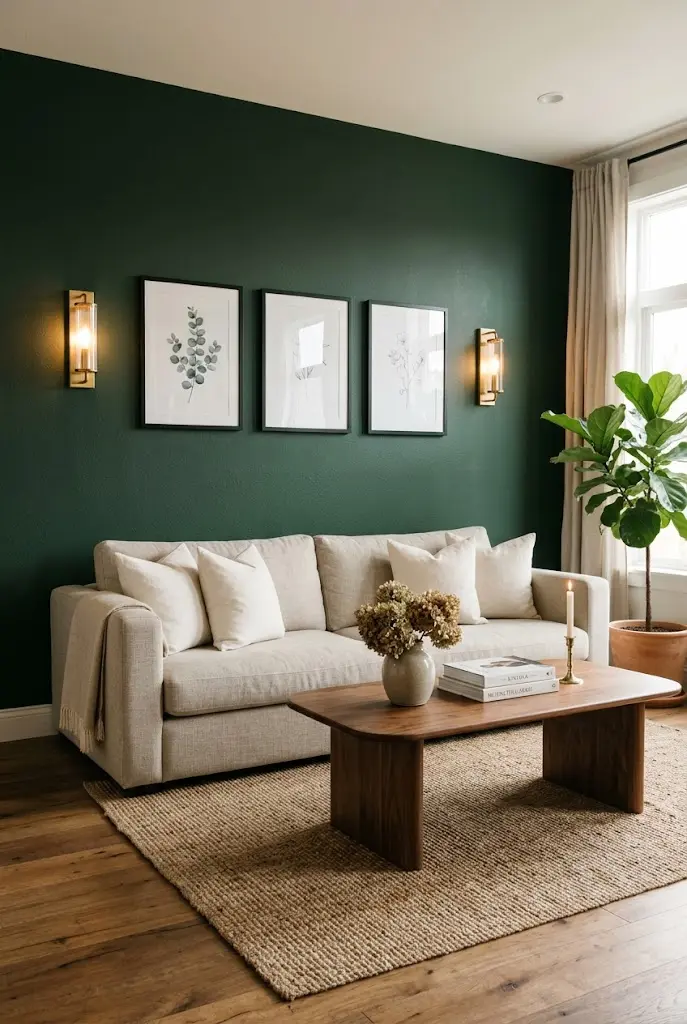
If your living room feels too plain, an accent wall can introduce depth without requiring you to repaint the entire space. Deep forest green, muted navy, warm terracotta, and chocolate brown are attractive choices for creating a more distinctive interior.
Choose a wall that naturally deserves attention, such as the area behind the sofa or the wall surrounding a fireplace. The color should complement the existing flooring, upholstery, and natural light.
For a balanced design, pair darker walls with lighter furniture, warm wood, and carefully placed lighting. This contrast helps the room feel inviting rather than visually heavy.
Color combinations worth considering:
- Forest green with cream and walnut.
- Navy blue with warm white and brass.
- Terracotta with oatmeal and natural oak.
- Chocolate brown with ivory and caramel.
Renters can explore removable wallpaper or freestanding decorative screens instead of permanent painting, depending on their lease and wall conditions.
6. Rearrange Your Furniture to Improve the Layout
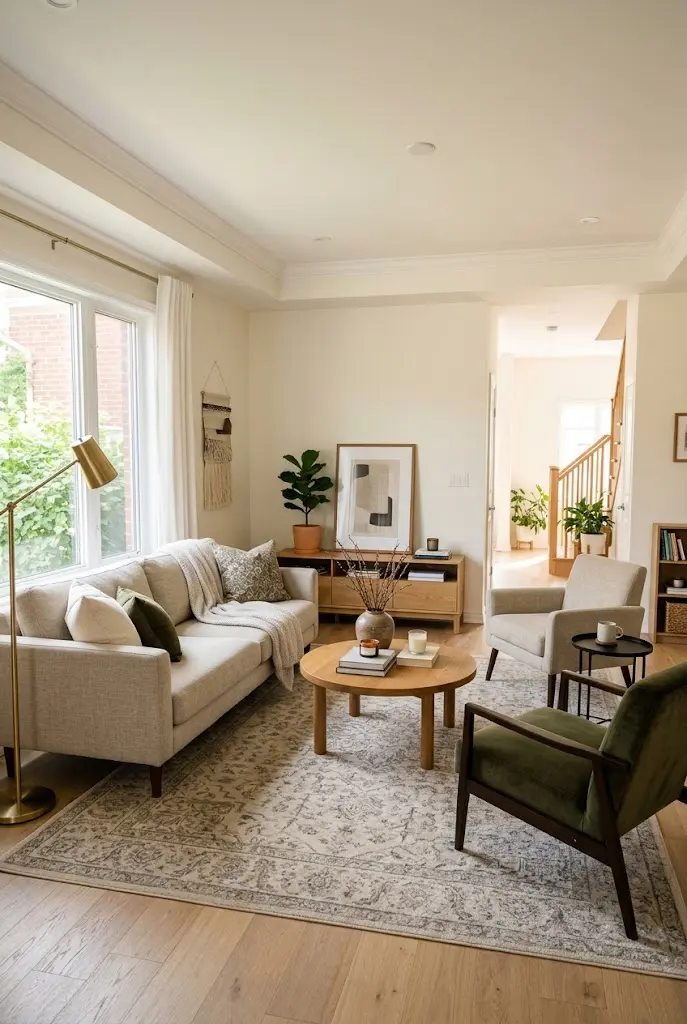
Sometimes the best living room refresh doesn’t involve purchasing anything. Furniture placement can have a major influence on how comfortable and spacious the room feels.
If all your furniture is pushed against the walls, try creating a more connected seating arrangement. Bring the sofa slightly forward and position accent chairs opposite or beside it to encourage conversation.
Think about how people move through the room. Avoid blocking doorways, walkways, windows, or frequently used storage areas.
A simple furniture refresh can follow three steps:
- Identify the main focal point, such as a fireplace, television, or large window.
- Arrange your sofa and chairs around the focal point while maintaining comfortable walking paths.
- Position the coffee table within convenient reach of the seating.
In a small living room, consider a compact coffee table or nesting tables instead of oversized furniture.
Common Mistake: Creating a seating arrangement that looks attractive in photographs but leaves insufficient room to move around comfortably.
7. Add Natural Wood for Warmth and Character

Natural wood is a useful way to make a living room feel warmer and less visually sterile. It introduces organic variation through grain, color, and texture while working beautifully with many decorating styles.
You don’t need matching wooden furniture throughout the room. In fact, mixing different wood tones can create a more collected and interesting appearance when the undertones work together.
Consider introducing:
- A natural oak coffee table.
- Walnut side tables.
- Wooden floating shelves.
- A sculptural timber accent chair.
- A simple wooden console behind the sofa.
If you’re working with an existing living room, start with one or two additions rather than replacing every furniture piece.
For a more elevated look, combine natural wood with linen, stone-inspired finishes, soft upholstery, and warm lighting.
8. Refresh Your Windows With Beautiful Curtains

Window treatments can make a bigger difference than many homeowners expect. Old, heavy, or poorly fitted curtains can make a living room feel dated, while well-chosen fabrics create a softer and more finished appearance.
For a fresh update, consider full-length linen or linen-look curtains in warm white, oatmeal, or soft natural beige. These shades work particularly well with neutral walls and wooden furniture.
Pay attention to curtain placement. Hanging the rod slightly above the window frame and extending it beyond the window edges can create the impression of a taller and wider window, provided the architecture allows it.
Curtain styles to explore:
- Sheer curtains for softly filtered daylight.
- Linen panels for relaxed texture.
- Heavier lined curtains for greater privacy.
- Neutral blackout curtains for bedrooms or living rooms where light control matters.
Quick Tip: Choose a curtain length that allows the fabric to hang neatly without creating excessive pooling on the floor.
9. Introduce Modern Lighting With Multiple Light Sources
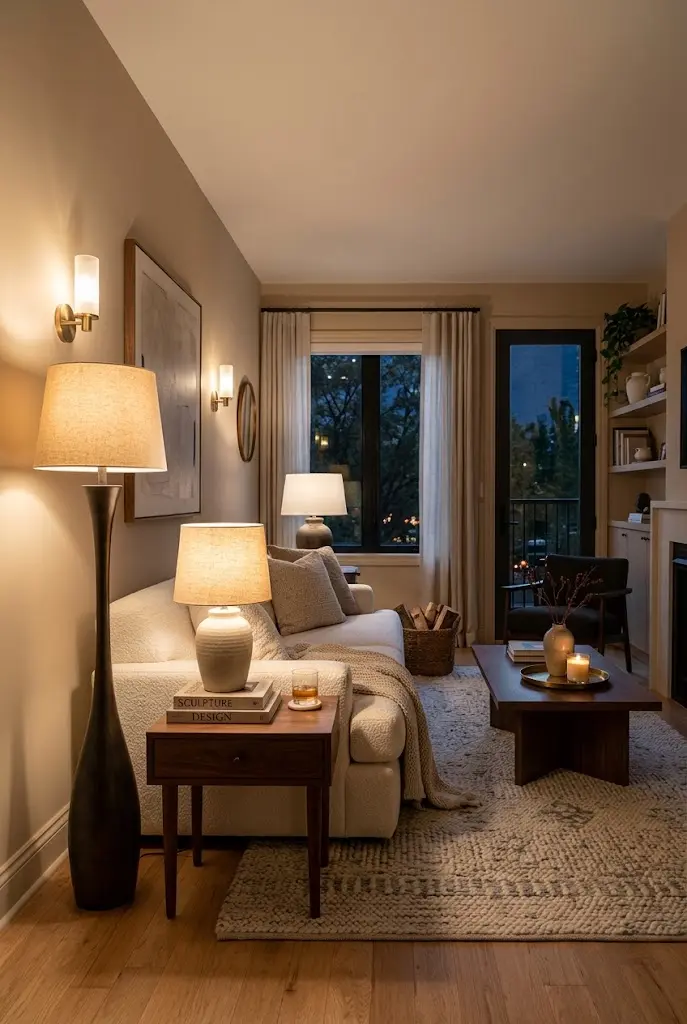
Lighting has a major influence on the mood of a living room. Depending on the time of day, a single overhead fixture can make the space feel harsh or less inviting.
A better approach is to create layers of light. Combine general illumination with table lamps, floor lamps, wall sconces, and carefully positioned accent lighting.
This also gives you greater flexibility. Brighter lighting can support everyday activities, while softer lamps create a relaxed atmosphere in the evening.
Consider these lighting additions:
- A sculptural floor lamp beside the sofa.
- A table lamp on a side table.
- Wall sconces beside artwork or shelving.
- A statement pendant above a central seating area.
- Warm-toned accent lighting for evening use.
For a cohesive appearance, coordinate the finishes of your lighting fixtures with nearby furniture hardware and decorative accessories.
10. Style Your Coffee Table With Thoughtful Accessories
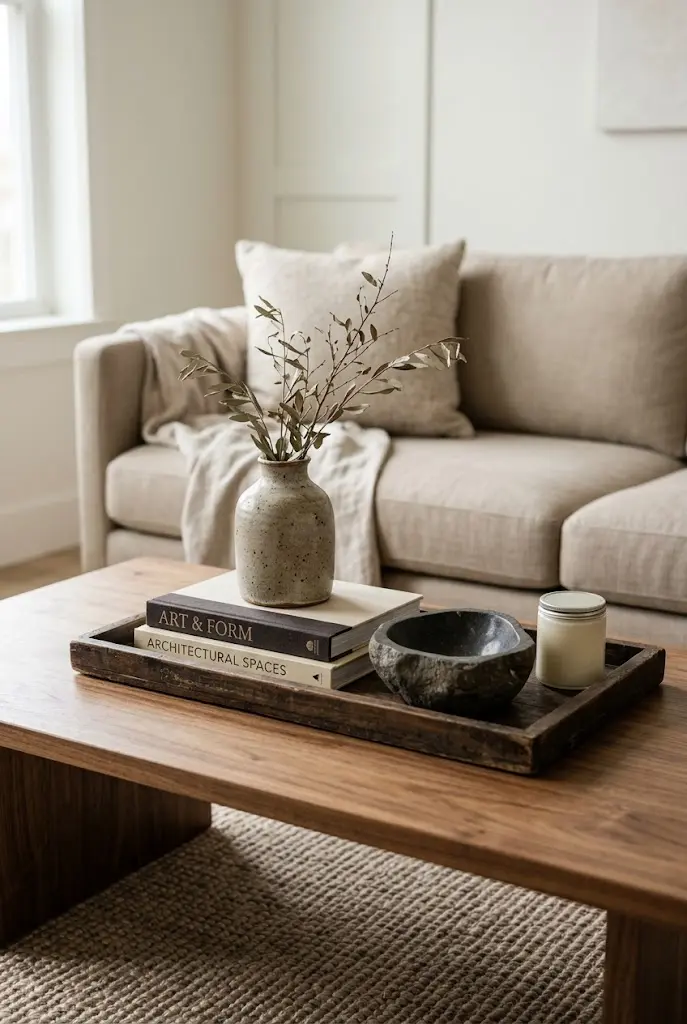
A coffee table is a natural place to introduce personality and decorative detail. Instead of filling the entire surface with accessories, create a small arrangement that feels balanced and leaves enough room for everyday use.
A combination of different heights, shapes, and materials usually works well. For example, a shallow wooden tray can hold a ceramic vase and a small decorative object, while a stack of attractive books adds height and visual interest.
An easy coffee table arrangement includes:
- Two or three carefully selected decorative books.
- A ceramic or glass vase.
- A small bowl or sculptural object.
- A wooden or stone tray.
- A candle or seasonal natural accent.
The size of your accessories should suit the table. A large coffee table can support a more substantial arrangement, while a small table benefits from fewer objects.
Do: Leave some open surface area for drinks, remote controls, and everyday activities.
Don’t: Overload the table with accessories that make it difficult to use.
11. Bring Life Into the Room With Indoor Plants

Indoor plants can introduce natural color, texture, and visual movement into a living room. They also provide a useful way to soften the straight lines of sofas, shelving, and architectural details.
A larger plant can create a focal point beside a window or in an otherwise empty corner. Smaller plants work well on shelves, side tables, or plant stands.
Choose varieties according to the available light and the amount of care you can provide. A plant that suits a bright window may not be appropriate for a darker corner.
Ideas for incorporating greenery:
- Place a tall indoor tree beside a large window.
- Use a smaller potted plant on a wooden side table.
- Arrange a few plants at different heights near an empty corner.
- Choose simple ceramic or terracotta planters.
- Introduce trailing greenery on an appropriate shelf.
For a more cohesive look, coordinate planter finishes with your existing furniture and decorative accessories.
12. Create a Gallery Wall With Personal Artwork

13. Add Custom-Looking Built-In Shelving for a Finished Interior

If your living room lacks storage or has an empty wall that feels unfinished, built-in shelving can provide both practical function and architectural character.
Floor-to-ceiling shelves create a strong visual feature while providing space for books, decorative objects, framed photographs, and carefully selected accessories. They can also make an ordinary wall feel more intentional.
For a premium design, consider custom cabinetry with a combination of open shelves and closed storage. This allows you to display meaningful objects while keeping less attractive everyday items out of sight.
A more accessible alternative is to use modular shelving units, painted bookcases, or carefully arranged freestanding furniture to create a similar visual principle without a full custom installation.
Styling suggestions:
- Arrange books both vertically and horizontally.
- Leave some shelves partially empty.
- Introduce ceramics and sculptural objects.
- Mix wood finishes with painted cabinetry.
- Use concealed storage for items that create visual clutter.
Editor’s Note: Shelving looks more cohesive when objects are arranged in small groups rather than filling every available space.