

Sage green has a special way of making a room feel calm, inviting, and effortlessly elegant. Its muted blend of green and gray brings a subtle connection to nature without overwhelming a space with color. Whether you prefer modern minimalism, cozy cottage-inspired interiors, or a soft, romantic aesthetic, this versatile shade can work beautifully throughout your home.
One of the best things about decorating with sage green is how easily it pairs with other colors and materials. Creamy whites, warm beige, natural wood, brushed brass, and soft linen can all complement its understated character. You don’t need to repaint every wall or replace your furniture to achieve the look, either. A few carefully chosen accents can make a noticeable difference.
These 15 sage green aesthetic ideas explore different ways to use this soothing color, from statement walls and layered bedding to kitchen cabinets and delicate decorative details. Each idea offers practical inspiration for creating a home that feels balanced, personal, and beautifully put together.
1. Create a Soft Sage Green Bedroom
A sage green bedroom is an ideal starting point if you want a peaceful, elegant atmosphere. The muted color feels restful without being dull, especially when paired with creamy white bedding, natural wood furniture, and soft fabrics.

For a balanced look, paint the wall behind your bed sage green and keep the remaining walls warm white. Layer your bed with ivory sheets, a textured duvet, and a few sage green cushions. A light oak nightstand and a ceramic table lamp will add warmth without competing with the color.
Styling tips:
- Choose linen or cotton bedding for a relaxed, natural appearance.
- Add a cream-colored throw blanket for contrast.
- Use warm lighting to create a cozy evening atmosphere.
- Introduce small wooden or woven accessories for extra texture.
For a smaller bedroom, consider using sage green on just the headboard wall or through bedding and curtains instead of painting the entire room.
2. Design a Cozy Sage Green Living Room
Sage green can make a living room feel welcoming while maintaining a clean, refined appearance. It works particularly well with warm neutrals, textured upholstery, and natural materials.

If you want to make sage green the main feature, choose a sofa in a muted shade and surround it with cream-colored walls, a pale rug, and light wood furniture. Alternatively, keep your existing neutral sofa and introduce sage green through cushions, curtains, artwork, or an upholstered accent chair.
The secret is to create contrast through texture rather than introducing too many competing colors.
Consider combining:
- A sage green sofa or accent chair.
- Cream or oatmeal-colored cushions.
- A natural wood coffee table.
- A textured ivory area rug.
- A few leafy plants in understated ceramic pots.
Quick Tip: If your living room receives limited natural light, try a lighter sage shade with warm undertones. Deep green upholstery and darker walls can still work, but they may create a moodier atmosphere.
3. Add Sage Green Kitchen Cabinets
Sage green kitchen cabinets offer a softer alternative to traditional white cabinetry while remaining versatile enough for everyday interiors. The color pairs naturally with light wood, warm white walls, creamy backsplashes, and understated metal hardware.
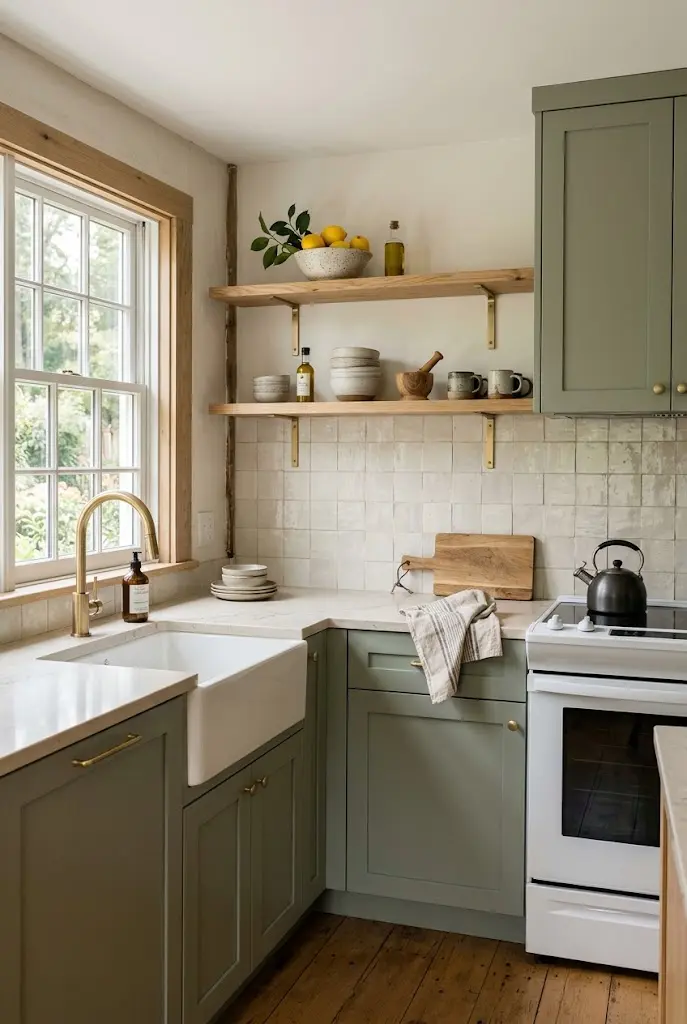
For a fresh, timeless-inspired look, combine sage green lower cabinets with warm white upper cabinets. This two-tone approach introduces color without making the kitchen feel visually heavy.
If you prefer a more immersive design, use sage green across all the cabinetry and balance it with a pale countertop and a simple backsplash.
Materials that complement sage green cabinets:
| Material | Visual Effect |
|---|---|
| Light oak | Adds natural warmth |
| Creamy quartz | Creates a bright, clean contrast |
| Brushed brass | Introduces a soft metallic accent |
| White ceramic tile | Keeps the design fresh and simple |
| Natural stone | Adds variation and organic texture |
For a budget-conscious update, repainting suitable existing cabinets may be an option. Proper surface preparation and a paint formulated for cabinetry are important for achieving a durable finish.
4. Style a Sage Green Bathroom
A sage green bathroom can feel fresh, spa-inspired, and quietly luxurious without requiring an elaborate renovation. The shade works beautifully with white porcelain, warm wood, natural stone, and soft textiles.
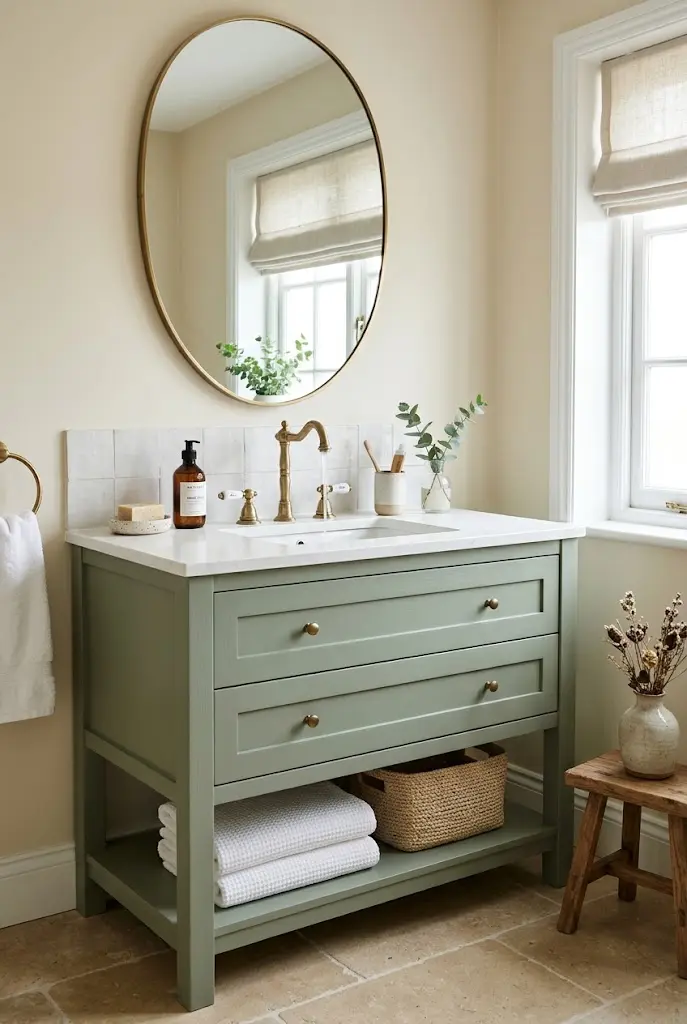
For a simple update, use sage green on the vanity cabinet while keeping the walls and larger surfaces light. Add white towels, a small wooden stool, and a ceramic soap dispenser to create a cohesive look.
If you’re renovating, sage green wall tiles or a painted bathroom wall can introduce more color. The right finish and materials matter, particularly in areas exposed to moisture.
Ways to introduce sage green:
- Paint a suitable vanity cabinet.
- Choose sage green wall tiles.
- Add a muted green shower curtain.
- Use sage-colored hand towels and bath mats.
- Display a small plant suited to the bathroom’s available light and humidity.
Editor’s Note: A bathroom with limited daylight can benefit from lighter sage shades, warm-white lighting, and reflective surfaces. This combination helps preserve a bright, comfortable feeling.
5. Layer Sage Green With Cream and Beige
One of the easiest ways to achieve a soft sage green aesthetic is to combine it with cream and beige. These shades create a gentle, coordinated palette that feels warm rather than stark.

Instead of introducing green through a single dominant object, distribute it throughout the room in small, intentional layers. For example, a cream sofa can be paired with sage cushions, a beige throw, pale wood furniture, and a muted green ceramic vase.
The result is a subtle color scheme in which every element contributes to the overall atmosphere.
A Simple Sage Green Color Palette
- Sage green: The main accent color.
- Warm ivory: A light foundation for walls and textiles.
- Sand beige: A soft, earthy supporting shade.
- Natural oak: A source of warmth and visual texture.
- Muted brown: A grounding accent for smaller accessories.
Avoid making every surface exactly the same shade. Small differences in color, texture, and finish help the room feel more natural and visually interesting.
6. Decorate With Sage Green Curtains
Sage green curtains introduce color while preserving the flexibility of a neutral room. They can soften the edges of a window, add visual height, and create a connection between the interior and the greenery outside.

For an airy aesthetic, choose light-filtering curtains in a muted sage shade. Linen or linen-look fabrics offer a relaxed appearance, while heavier woven materials create a fuller, more substantial effect.
Hang curtains high enough to create an elongated visual line, provided the window and ceiling arrangement allows it. Let the fabric fall naturally without excessive pooling if you prefer a clean, contemporary finish.
Do / Don’t
- Do: Pair sage curtains with ivory walls and warm wood.
- Do: Consider the room’s natural light when selecting fabric opacity.
- Don’t: Choose curtains so dark that they overpower a small, softly decorated room unless a moodier look is intentional.
- Don’t: Forget to coordinate the curtain length with the window and floor.
Sage green curtains work especially well in bedrooms, living rooms, reading corners, and dining spaces.
7. Create a Sage Green Reading Nook
A reading nook is a wonderful place to experiment with sage green because the color naturally suits quiet, restful spaces.

Start with a comfortable armchair in sage green upholstery or place a muted green cushion on a neutral chair. Add a small side table, a warm reading lamp, and a soft throw blanket. If space allows, a narrow bookcase or floating shelves can make the corner feel more complete.
A small nook doesn’t need many accessories. A few books, a ceramic mug, and a plant can provide enough detail without cluttering the area.
How to put the nook together:
- Choose a comfortable chair that fits the available floor space.
- Add a reading light positioned to illuminate the book without creating uncomfortable glare.
- Introduce sage green through upholstery, cushions, or a painted wall.
- Finish with a compact table and a small selection of personal objects.
For a rental, use removable decor and freestanding furniture instead of making permanent changes.
8. Bring Sage Green Into Your Dining Room
Sage green can give a dining room a relaxed, welcoming character while remaining polished enough for special occasions.

If you want a subtle look, keep the dining table and chairs in natural wood and use sage green through table linens, upholstered seating, or decorative ceramics. A sage green wall behind the dining table can create a more defined focal point.
For everyday styling, try a simple combination of a neutral table runner, ceramic plates, clear glassware, and a small arrangement of fresh greenery.
For a more formal setting, pair sage green table linens with ivory napkins and restrained brass details. Avoid adding too many competing colors, especially when the table itself has a strong wood grain.
9. Add Sage Green Through Bedding and Textures
You don’t need painted walls or new furniture to create a sage green bedroom aesthetic. Textiles offer a flexible way to introduce the color, particularly if you rent your home or prefer to change your decor seasonally.
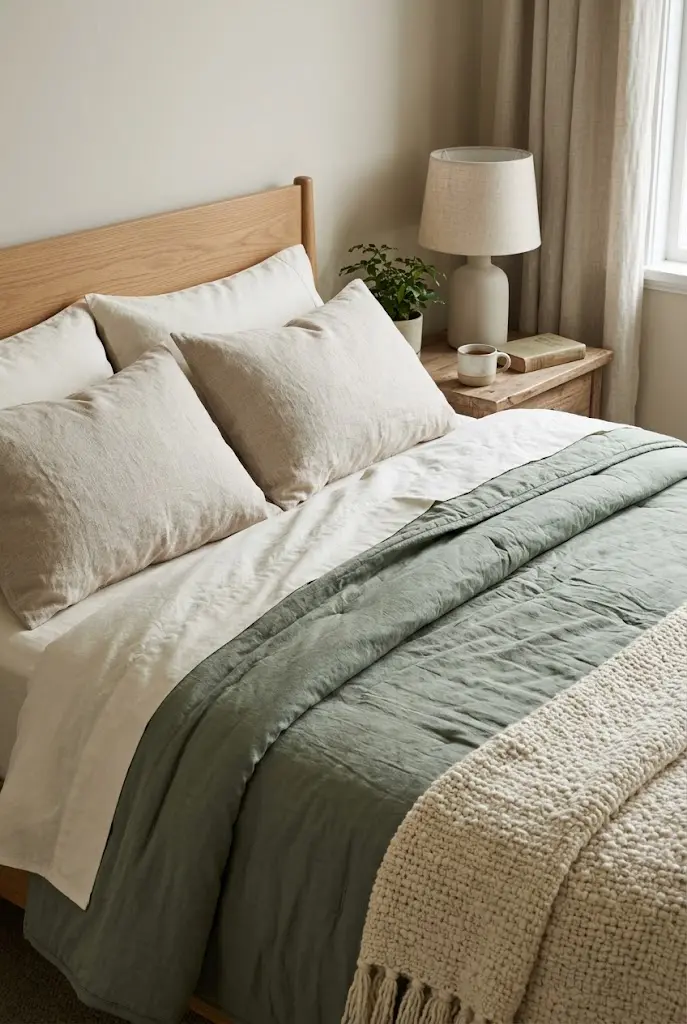
Start with neutral bedding and layer sage green through a quilt, duvet cover, pillowcases, or decorative cushions. Combining different textures keeps the arrangement interesting even when the colors remain restrained.
For example, smooth cotton sheets can sit beneath a softly textured sage quilt, while linen pillowcases and a knitted throw add variety.
Try these combinations:
- Sage quilt + ivory sheets + oak bedside furniture.
- Sage pillowcases + cream duvet + beige throw.
- Muted green duvet cover + white pillows + natural linen curtains.
- Sage cushions + neutral bedding + a woven bench.
Quick Tip: Choose one dominant textile and let the remaining layers support it. If the duvet is sage green, you may need only a few smaller green accents elsewhere in the room.
10. Style a Sage Green Home Office
A sage green home office can feel focused and comfortable without looking overly formal. The shade works well in workspaces where you want a little color but still need the desk, monitor, and everyday supplies to remain the main functional elements.

For a simple arrangement, place a natural wood desk against a pale sage green wall. Add a comfortable neutral chair, a desk lamp, and a few carefully organized accessories.
If you work in a shared room, use sage green in smaller ways instead. A desk mat, storage boxes, a pinboard, or a small upholstered chair can introduce the color without changing the entire space.
Practical details to consider:
- Keep the main work surface clear enough for daily tasks.
- Use task lighting suited to your work.
- Position your monitor to reduce distracting window reflections.
- Choose storage that accommodates your actual equipment and paperwork.
- Avoid filling the desk with decorative items that reduce usable space.
The best office aesthetic is one that looks calm and still supports the way you work.
11. Combine Sage Green With Natural Wood
Natural wood is one of the most effective materials to pair with sage green. The wood introduces warmth and texture, while the green contributes a soft, botanical quality.
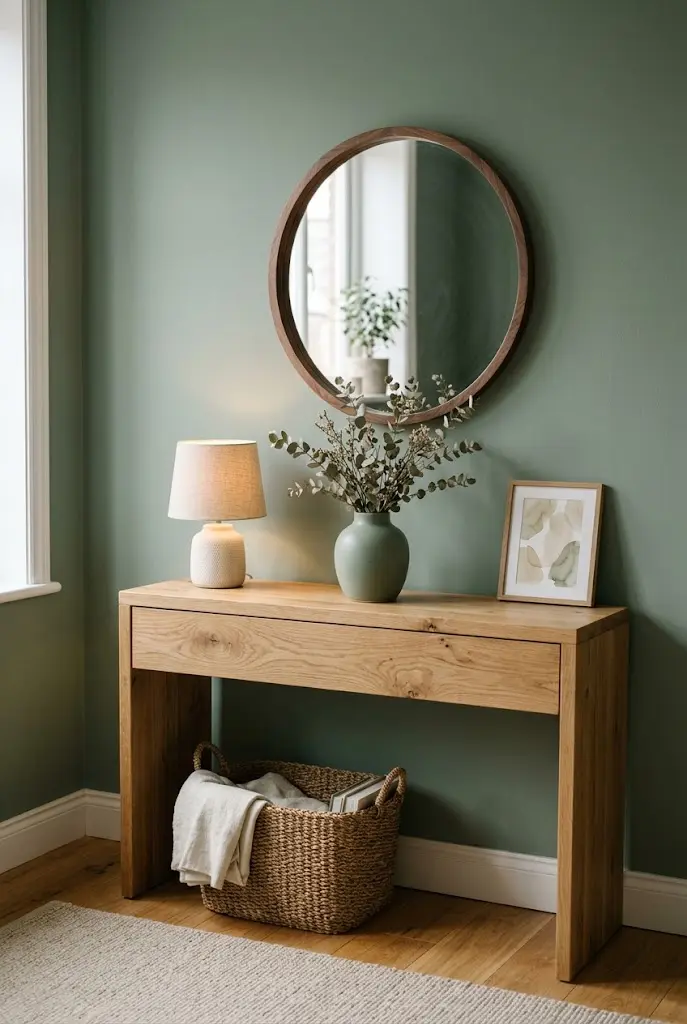
Light oak creates an airy, contemporary appearance. Medium-toned wood adds depth, while darker walnut can make sage green feel more grounded and dramatic.
You can introduce this combination in almost any room through furniture, shelving, flooring, picture frames, or small accessories.
Ways to combine the two:
- Sage green walls with a light oak bed frame.
- Sage cabinets with natural wood shelving.
- A green upholstered chair beside a walnut side table.
- A sage green console with a wooden mirror frame.
- Muted green ceramics displayed on open oak shelves.
A useful approach is to let one material dominate and use the other as a supporting feature. This helps prevent the room from feeling visually busy.
12. Use Sage Green in a Cottage-Inspired Interior
Sage green fits naturally into cottage-inspired interiors, where gentle colors, tactile materials, and a collected appearance create a welcoming atmosphere.

To achieve this style, combine muted green with warm white walls, vintage-inspired wooden furniture, floral textiles, and handmade ceramics. The goal isn’t to make everything look old-fashioned. Instead, balance traditional details with simple shapes and comfortable furnishings.
A sage green painted dresser, for example, can become a focal point in a bedroom with cream bedding and delicate floral curtains. In a living room, the same color might appear on a small side table beside a linen sofa.
Elements that help establish the look:
- Softly painted furniture.
- Small-scale botanical or floral prints.
- Natural wood and woven baskets.
- Handmade-looking ceramic pieces.
- Warm white textiles.
- Understated vintage-inspired hardware.
Common Mistake: Adding too many floral patterns, distressed finishes, and decorative accessories can make a small room feel crowded.
Better Approach: Choose one or two cottage-inspired focal points and let the remaining surfaces stay relatively simple.
13. Create a Sage Green Gallery Wall
A gallery wall is a practical way to introduce sage green without committing to a large painted surface. It also gives you an opportunity to combine art, photographs, and decorative objects that reflect your personal style.

For a soft and elegant appearance, choose artwork featuring botanical illustrations, muted landscapes, abstract shapes, or subtle architectural photography.
Use frames in a coordinated selection of natural oak, warm white, or understated dark wood. The artwork itself can provide most of the sage green, while the frames keep the overall arrangement cohesive.
Before hanging anything, arrange the pieces on the floor to test the composition. A mix of large and small frames usually creates more visual interest than a collection of identical pieces, although a symmetrical grid can work well in a contemporary interior.
A simple gallery wall formula:
- Select one larger artwork to establish the focal point.
- Add two or three smaller pieces with related colors.
- Keep frame finishes coordinated.
- Maintain consistent spacing between the frames.
- Leave enough empty wall around the arrangement so it doesn’t feel crowded.
For a rental, removable picture-hanging solutions may offer an alternative to permanent hardware, depending on the wall surface and the weight of each frame.
14. Bring Sage Green Into Your Entryway
The entryway sets the tone for the rest of your home, and sage green can help make this often-overlooked space feel welcoming and intentional.
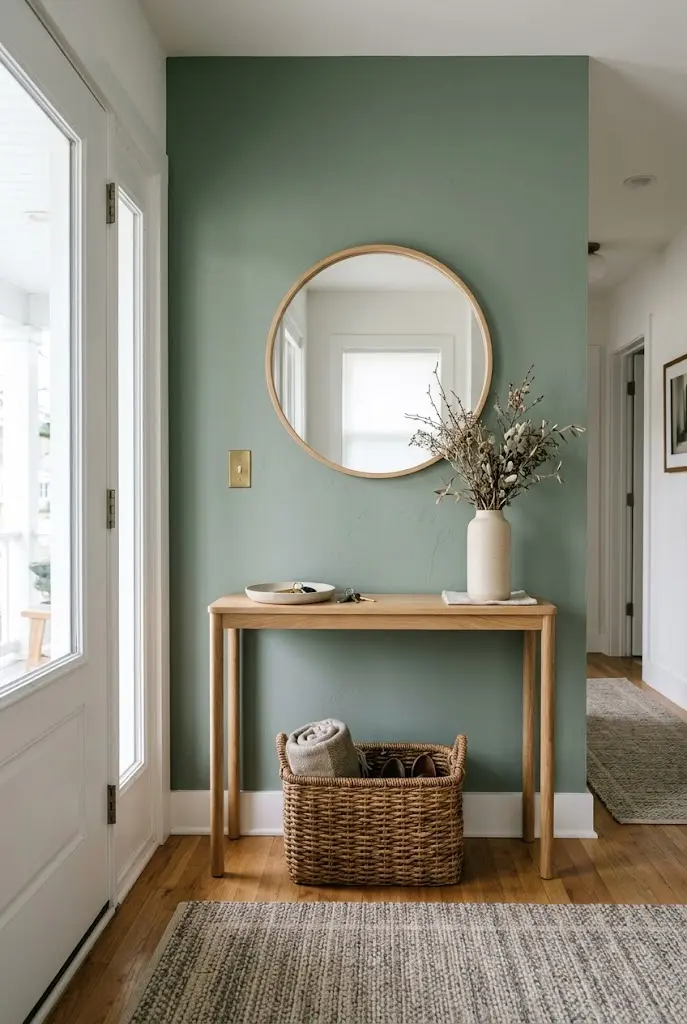
In a narrow entry, consider a muted sage green wall paired with a slim wooden console, a simple mirror, and a small tray for everyday essentials. If you have very little floor space, a painted wall and a few wall-mounted hooks may be enough.
A larger entry can accommodate a sage green storage bench, a small cabinet, or a patterned runner that incorporates the color.
Keep practicality in mind. The entryway needs to support shoes, bags, keys, and daily movement, so decorative objects should not interfere with the walking path.
Useful entryway details:
- A narrow console or wall-mounted shelf.
- A mirror positioned at a convenient height.
- A tray for keys and small essentials.
- A woven basket for selected everyday items.
- A washable runner suited to the amount of foot traffic.
- Wall hooks or enclosed storage where needed.
For a more polished finish, repeat sage green in a small accessory elsewhere in the adjoining room.
15. Finish With Sage Green Decorative Accents
If you’re unsure about using sage green on walls or large furniture, begin with decorative accents. This approach lets you explore the color gradually and change the arrangement whenever your preferences evolve.

Small accessories can make a neutral room feel more coordinated without requiring a major investment. The most effective choices are items that serve a purpose as well as contributing to the overall look.
Consider incorporating:
- Sage green ceramic vases.
- Muted green cushion covers.
- A small decorative bowl.
- Framed botanical prints.
- A soft green table runner.
- A fabric lampshade in a complementary shade.
- A planter in a matte sage finish.
You don’t need all these items in one room. Start with two or three accents and repeat the color subtly across different heights or surfaces.
For example, a sage vase on a console and a matching cushion on a nearby sofa can create a visual connection without making the entire space green.
Quick Tip: Before purchasing new accessories, look at what you already own. A neutral room may need only one carefully chosen green object and a small change in textile styling to achieve the effect you’re after.