

Fall is the perfect time to make your home feel warmer, softer, and more inviting. As the days grow shorter and the weather cools, small decorating changes can bring the beauty of the season indoors. Think chunky knit blankets, warm wood finishes, amber glass, natural branches, and rich autumn colors that make everyday spaces feel more comfortable.
The best fall decor doesn’t require a complete room makeover or a house filled with pumpkins. A few thoughtfully chosen accents can refresh your living room, create a welcoming entryway, or make your dining table feel special for seasonal gatherings.
These 21 beautiful fall decor ideas combine classic autumn elements with modern styling, natural materials, and practical decorating solutions. Whether you prefer a neutral farmhouse look, a traditional harvest palette, or a sophisticated modern interior, you’ll find inspiration for creating a cozy and stylish home that feels seasonal without becoming cluttered.
1. Layer Your Living Room With Chunky Knit Blankets

Few things make a living room feel more inviting in autumn than soft, textured blankets. Chunky knit throws, brushed cotton blankets, and woven wool-look textiles introduce the warmth and comfort associated with fall while giving sofas and armchairs a more relaxed appearance.
Choose colors that complement your existing furniture. Cream, oatmeal, caramel, rust, and chocolate brown work beautifully with neutral upholstery, while forest green or burgundy adds depth to a room with lighter walls.
For an effortless arrangement, drape a chunky throw over one end of the sofa and place a folded blanket in a nearby basket. Add a couple of coordinating cushions in different fabrics to create a layered look without making the seating area feel crowded.
Styling tip: Combine three textures, such as chunky knit, smooth cotton, and soft velvet, rather than purchasing several blankets that look almost identical.
2. Decorate Your Front Porch With Pumpkins and Mums
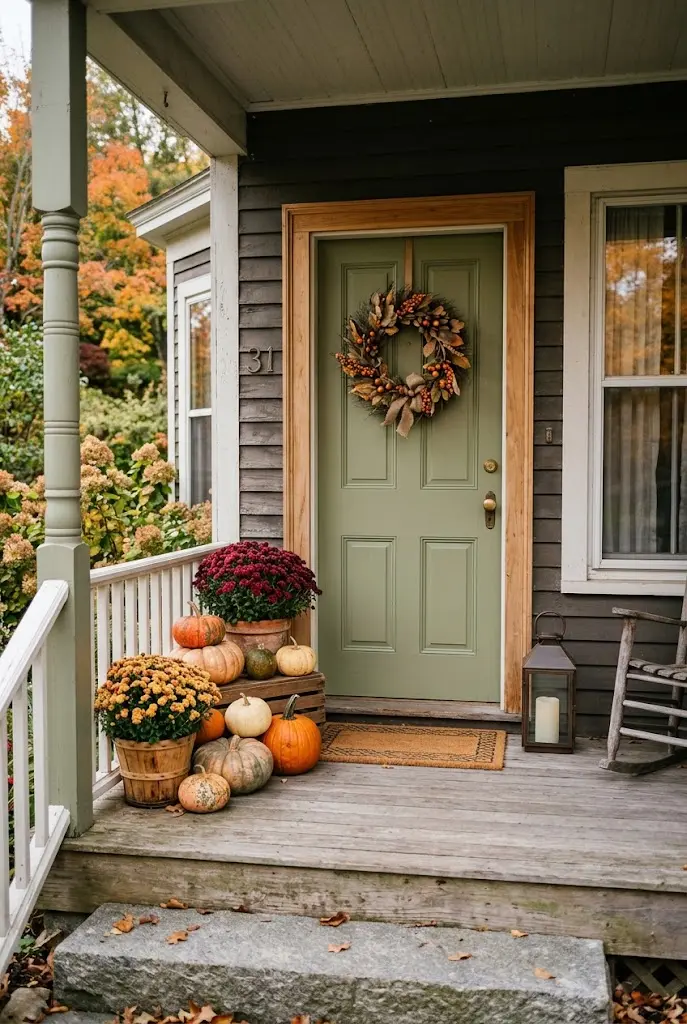
A welcoming front porch is one of the easiest places to introduce fall decorating. Pumpkins, seasonal flowers, and natural textures create an inviting entrance without requiring permanent changes to your home.
Arrange pumpkins in several sizes beside the front door, combining traditional orange varieties with white or muted green pumpkins for contrast. Place them around containers of chrysanthemums in burgundy, golden yellow, cream, or deep rust.
A natural coir doormat, a simple wreath, and a few lanterns can complete the arrangement. If your porch is small, concentrate the display on one side of the doorway instead of spreading decorations across the entire entrance.
For a more polished result, repeat two or three colors throughout the display. For example, orange pumpkins, burgundy mums, and a dark green wreath create a traditional autumn palette that feels coordinated.
Practical consideration: Keep the walking path and door swing clear, and choose weather-appropriate decorations for your local conditions.
3. Create a Warm Autumn Coffee Table Display

Your coffee table is an ideal place to introduce seasonal accents without changing the entire living room. A thoughtfully arranged display can make the space feel more connected to autumn while leaving enough room for everyday use.
Start with a decorative tray made from wood, woven fibers, or dark metal. Add a small ceramic vase filled with leafy branches, a candle in an amber glass holder, and a stack of two or three books with understated covers.
A small decorative pumpkin can introduce a recognizable fall element without overwhelming the arrangement. For a modern look, choose a matte white or muted green pumpkin rather than filling the table with bright orange decorations.
Keep the tallest object toward one side of the tray and vary the heights of the remaining pieces. This creates visual interest while allowing the objects to be appreciated individually.
Common mistake: Filling every available inch of the table with seasonal decorations.
Better approach: Leave some open space so the arrangement looks intentional and the table remains practical.
4. Style Your Fireplace Mantel With Autumn Foliage
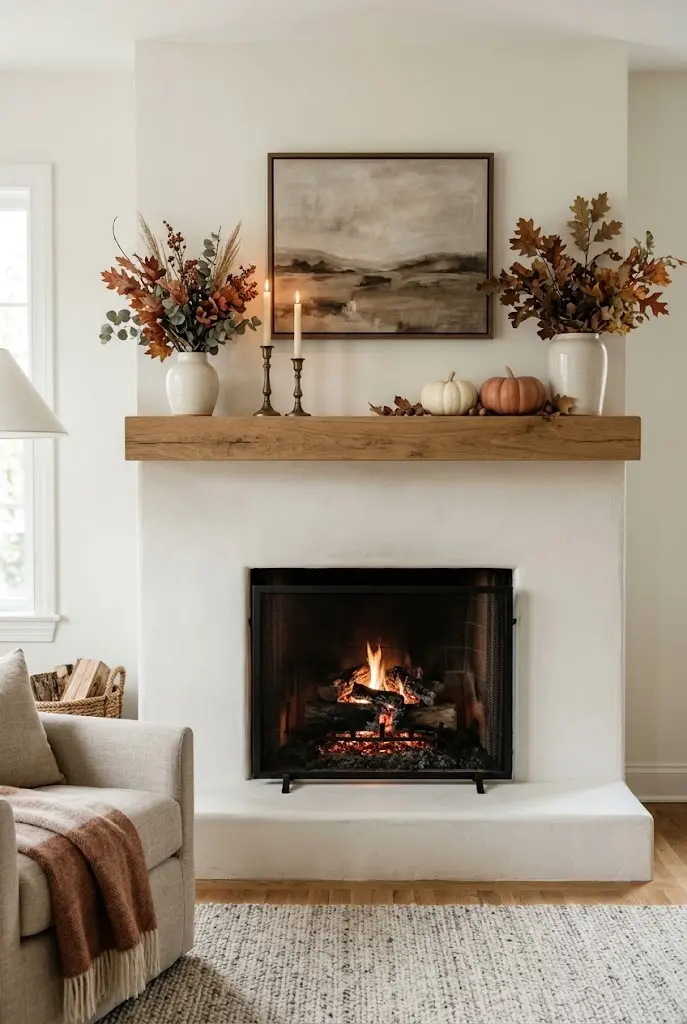
A fireplace mantel naturally draws attention, making it an excellent location for a seasonal display. Even when the fireplace isn’t in use, the mantel can provide a focal point that connects the colors and textures throughout your living room.
Begin with a simple foundation of autumn branches, dried foliage, or a restrained garland. Introduce a few decorative objects, such as ceramic vessels, brass candleholders, and small pumpkins.
For a traditional look, combine burnt orange leaves with dark wood and antique-inspired brass. If you prefer modern fall decor, use olive branches, muted brown foliage, cream ceramics, and understated black accents.
Vary the height of the objects instead of arranging everything in a straight line. A larger vase on one side and smaller decorative pieces on the other can create an appealing sense of balance.
If your fireplace is functional, keep dried foliage, garlands, candles, and other combustible decorations away from heat and flames. Follow the fireplace manufacturer’s clearance recommendations.
5. Bring Autumn Colors Into Your Bedroom
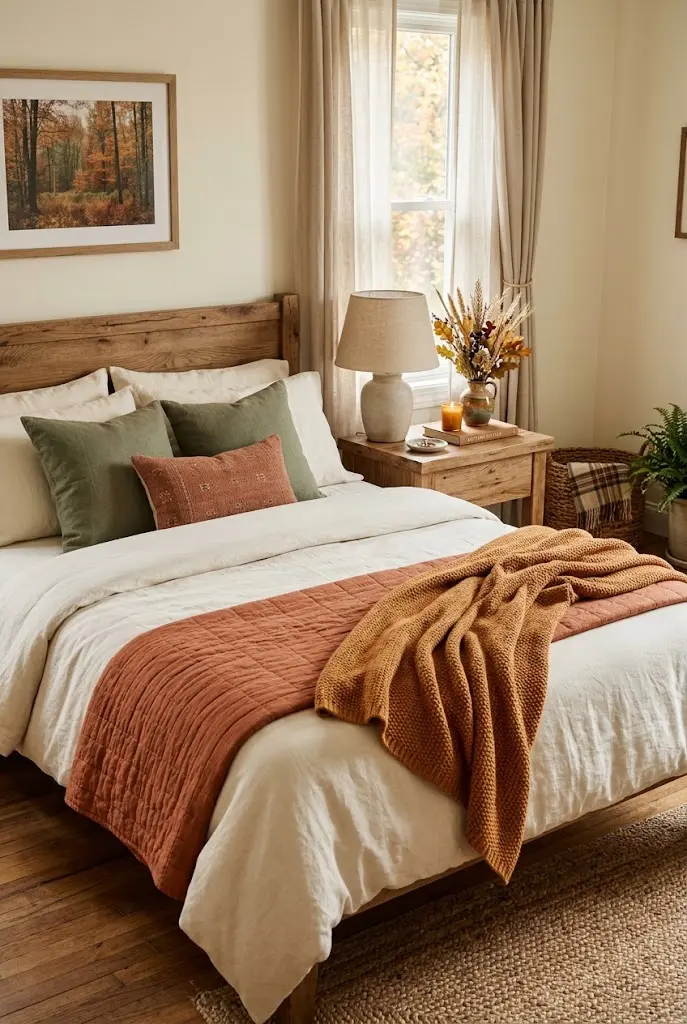
Your bedroom can feel more seasonal without replacing your bedding or investing in new furniture. Swapping a few textiles is often enough to introduce the warmth of fall.
Start with your existing sheets and duvet, then layer in a quilt, coverlet, or throw in a richer autumn shade. Terracotta, cinnamon, warm taupe, olive green, and deep burgundy can all work beautifully depending on your room’s existing colors.
If you have a neutral bedroom, a rust-colored quilt at the foot of the bed can create a noticeable change. Alternatively, use olive pillow covers and a camel-colored throw for a quieter interpretation of the season.
A wooden bedside table, a warm-shaded lamp, and a ceramic vase with dried stems can reinforce the palette without adding unnecessary decoration.
Quick tip: Choose one dominant seasonal color and repeat it in two or three places. This makes the bedroom feel coordinated rather than overly themed.
6. Decorate With Natural Branches and Dried Leaves
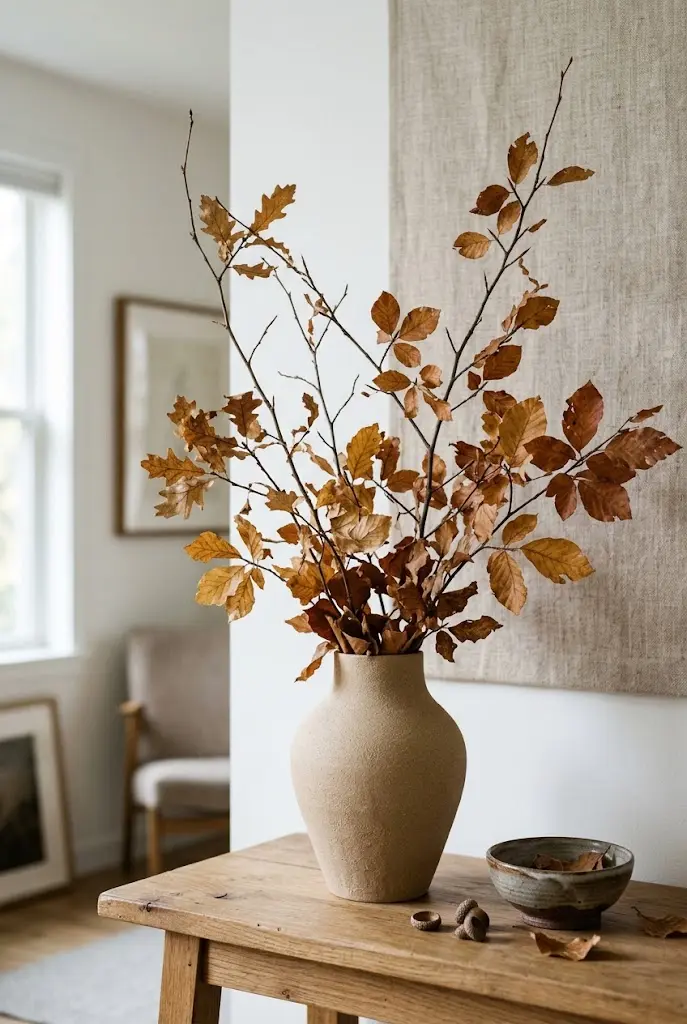
Natural branches and dried foliage offer a beautiful alternative to elaborate seasonal arrangements. Their irregular shapes, delicate textures, and earthy colors introduce autumn character while working with a wide range of interior styles.
Look for decorative branches with warm brown leaves, dried grasses, preserved foliage, or seasonal stems from a local florist. Place them in a tall ceramic vase, a glass vessel, or a substantial stoneware container.
A larger arrangement can make an impact beside a fireplace or in an empty corner, while a smaller collection works well on a dining table, console, or kitchen counter.
Choose a vessel that complements the stems. A rough-textured ceramic vase gives the arrangement an organic appearance, while clear glass keeps the display visually lighter.
The branches should have room to spread naturally. Avoid cutting or arranging every stem into a perfectly symmetrical shape, as some irregularity makes the display feel more authentic.
7. Set an Autumn Dining Table With Layered Textures
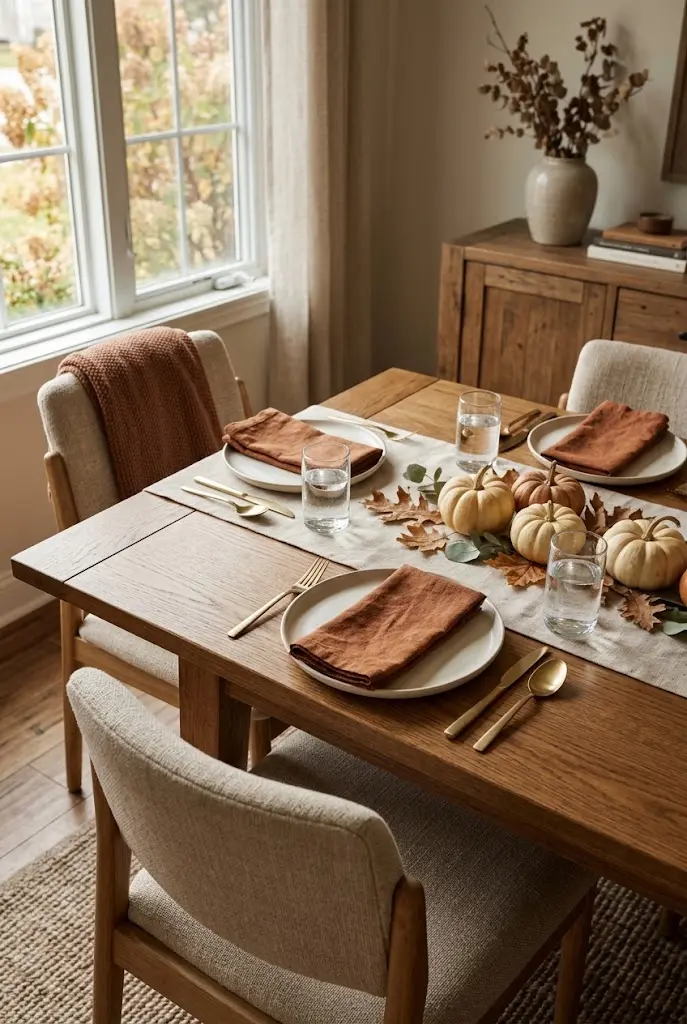
A fall dining table can feel special enough for a seasonal dinner yet simple enough for everyday meals. The key is to combine natural materials and a warm color palette without making the table difficult to use.
Start with a linen table runner in oatmeal, muted rust, or olive green. Layer it over a wood table or a neutral tablecloth, then add ceramic dinnerware, cloth napkins, and understated glassware.
For the centerpiece, arrange small pumpkins, a low bowl of pears, or a few seasonal branches along the center of the table. Keep the arrangement low enough that diners can comfortably see one another.
You can also mix different but complementary materials:
- Linen: Softens the overall arrangement.
- Stoneware: Adds an earthy, handmade quality.
- Wood: Introduces natural warmth.
- Clear glass: Keeps the table from looking visually heavy.
- Brass accents: Provide a subtle decorative contrast.
The finished table should look inviting rather than overly formal.
8. Add Amber Glass and Warm Metallic Accents

Amber glass is an easy way to make a room feel warmer without introducing large seasonal decorations. Its honey-colored appearance works especially well with wood, cream fabrics, brown leather, and muted autumn foliage.
Look for amber glass vases, small decorative bottles, candleholders, or drinking glasses. Group two or three pieces together on a side table, bookshelf, or kitchen counter.
To keep the arrangement balanced, combine the reflective glass with matte materials. A textured ceramic vessel or a wooden tray provides contrast and prevents the display from feeling too shiny.
Brushed brass can also complement the arrangement. A small brass bowl or understated candleholder introduces another warm finish without competing with the amber glass.
For a budget-conscious option, repurpose glass vessels you already own rather than purchasing an entire matching collection.
9. Give Your Entryway a Cozy Autumn Refresh
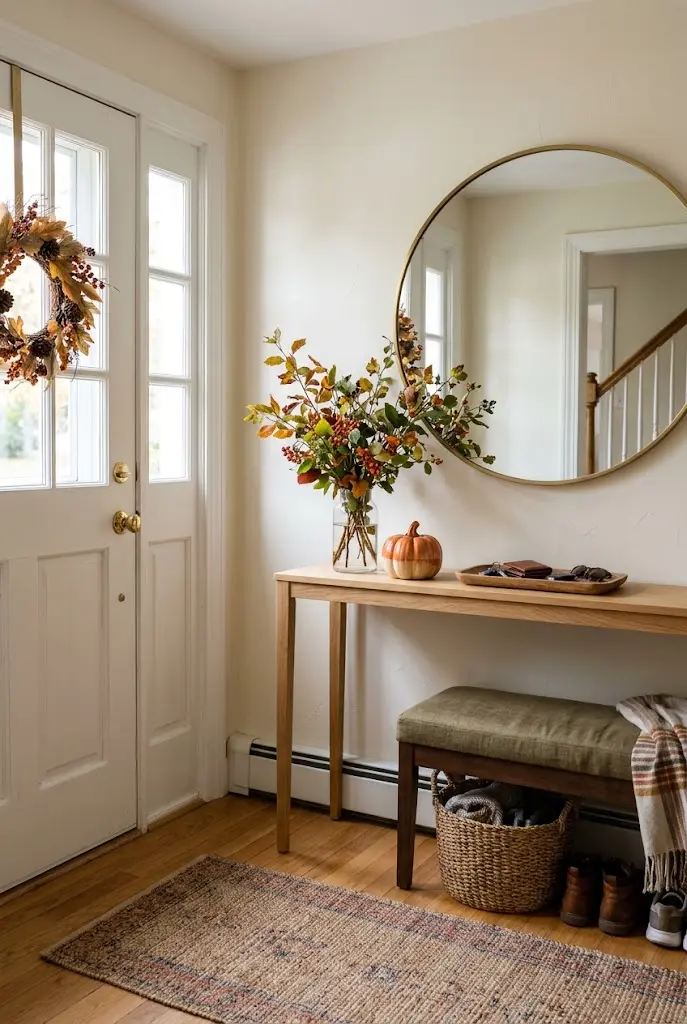
Your entryway sets the tone for the rest of your home. A few seasonal changes can make it feel welcoming while keeping the space practical for everyday arrivals and departures.
Begin with a natural-fiber runner or a washable rug in a warm, earthy color. Add a small bowl or tray on your console for keys, and introduce one seasonal accent, such as a ceramic pumpkin or a vase of dried stems.
If you have a bench, a textured cushion in rust or olive green can introduce autumn color without taking up additional floor space. A woven basket underneath provides storage for scarves, umbrellas, or other frequently used items.
In a narrow entryway, prioritize vertical styling. A mirror, a small wall hook arrangement, and a shallow console can provide function without obstructing the walking path.
Editor’s note: A clear surface often looks more polished than a crowded one. Let one seasonal arrangement stand out instead of decorating every available corner.
10. Use Rich Velvet Cushions for a More Sophisticated Fall Look

Velvet cushions are a useful way to introduce the deeper colors associated with autumn. Their soft surface catches the light differently from cotton and linen, giving a sofa or accent chair a richer appearance.
Choose shades such as forest green, aubergine, rust, tobacco brown, or deep navy. These colors work particularly well against cream, gray, tan, or natural linen upholstery.
Rather than covering the sofa in velvet, mix one or two velvet cushions with linen, boucle, or woven cotton. This contrast creates depth while keeping the arrangement comfortable and relaxed.
If your room already contains several patterns, solid velvet cushions can provide a visual pause. In a simpler room, a subtle embroidered or ribbed design may add extra interest.
Do: Mix velvet with at least one less reflective texture.
Don’t: Choose every cushion in the same shade and fabric if the goal is a layered, collected look.
11. Create a Rustic Fall Kitchen Counter Display

Your kitchen doesn’t need to be covered in seasonal decorations to feel ready for fall. A small arrangement of practical objects and natural accents can introduce the season while leaving your cooking surfaces usable.
Choose one section of the counter and group a wooden cutting board, a ceramic utensil crock, and a bowl of apples or pears. A small vase of dried stems or a single decorative pumpkin can complete the display.
Warm wood accessories work especially well against white, cream, or softly colored cabinetry. If your kitchen features dark cabinets, try light stoneware and golden-toned fruit to create contrast.
For an understated farmhouse look, combine reclaimed-looking wood, handmade ceramics, and a linen tea towel. For a more contemporary kitchen, keep the shapes simple and limit the number of decorative objects.
Keep food-preparation areas clear, and avoid placing decorative foliage where it can interfere with cooking or cleaning.
12. Hang a Natural Fall Wreath on Your Front Door

A wreath is a classic fall decorating choice, but the materials you select can give it a distinctly modern or traditional personality.
For a natural look, choose a grapevine base decorated with dried leaves, preserved foliage, seed pods, and muted autumn stems. A wreath with copper, rust, and brown tones complements traditional seasonal decorations, while olive green and cream create a quieter, more contemporary effect.
You don’t have to cover the entire wreath with decorations. An asymmetrical arrangement that leaves part of the base visible often looks more relaxed and organic.
Consider the size of your door before choosing a wreath. A very small wreath may disappear against a large entrance, while an oversized design can overwhelm a narrow door.
If the wreath will hang outdoors, select materials appropriate for the weather and the location where it will be displayed.
13. Bring Warmth to Your Bathroom With Autumn Textiles

Bathrooms are often overlooked during seasonal decorating, yet a few carefully chosen textiles can help them feel connected to the rest of the home.
Swap lightweight decorative towels for thicker cotton towels in warm white, taupe, muted olive, or cinnamon. A small bath mat in a complementary shade can introduce color without requiring a major change.
If you have a vanity with open shelving, use a woven basket to organize extra towels and introduce natural texture. A small ceramic vase or a simple wooden accessory can provide a subtle seasonal touch.
Avoid filling a bathroom with dried foliage or decorative items that are unsuitable for a damp environment. Keep counters and sinks easy to clean, and prioritize functional storage.
The goal is a warm, coordinated bathroom rather than an overtly themed autumn display.
14. Style a Bookshelf With Autumn Colors and Natural Objects
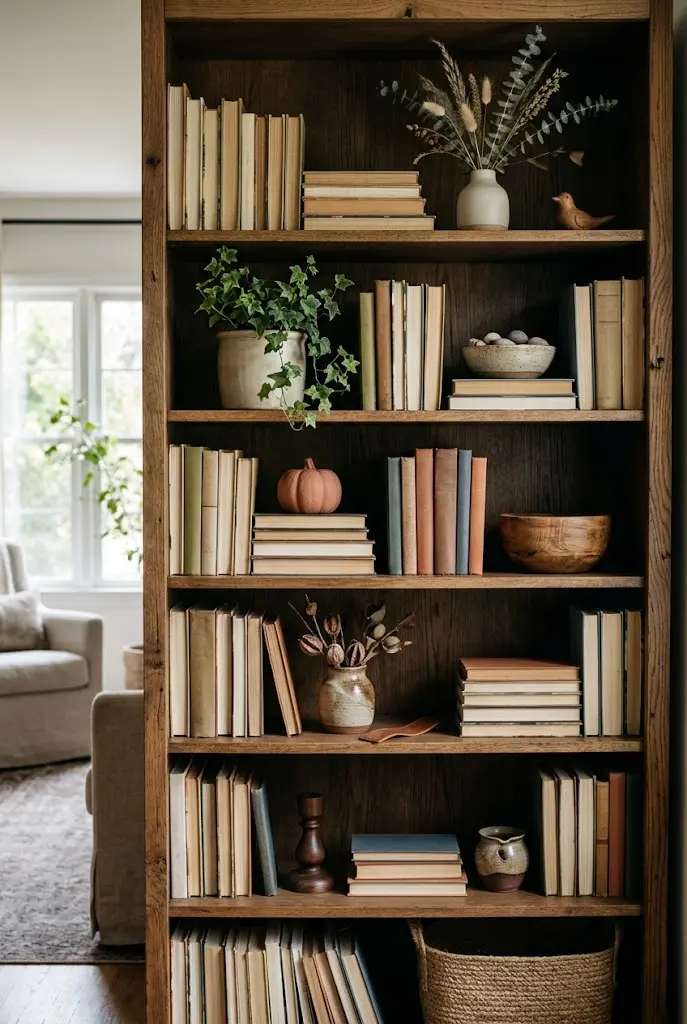
A bookshelf can become part of your fall decor without being emptied and restyled from scratch. Small adjustments to the colors, materials, and placement of existing objects can make the display feel more seasonal.
Start by grouping books with warm-colored spines together or turning a few neutral-covered books horizontally to create low platforms for decorative objects.
Introduce a small ceramic vessel, a wooden bowl, or a natural stone accessory. One or two seasonal elements, such as a miniature pumpkin or a small branch arrangement, can connect the shelf to the rest of the room.
Leave some open space between groups of objects. This helps each arrangement stand out and prevents the shelves from looking crowded.
If your bookshelf is already colorful, repeat a color that appears in the books rather than introducing several unrelated autumn shades.
Quick tip: Arrange objects in groups of different heights. A low bowl beside a taller vase creates more visual movement than several similarly sized objects lined up together.
15. Decorate With Plaid and Classic Autumn Patterns

Plaid is a traditional fall pattern that can make a room feel seasonal without relying on pumpkins or foliage. Its combination of warm colors and intersecting lines works particularly well in rustic, farmhouse, cottage, and traditional interiors.
Try a plaid throw on an armchair, a pair of patterned cushions on a neutral sofa, or a simple table runner in muted autumn tones.
For a restrained look, choose one dominant plaid and pair it with solid fabrics. A rust-and-cream blanket can work beautifully with olive cushions and natural wood furniture, while a dark green plaid looks especially inviting alongside brown leather.
The scale of the pattern matters. Larger checks tend to create a bolder statement, while smaller patterns can feel more subtle and traditional.
Avoid mixing several strong plaids unless the colors and scale have been considered carefully.
16. Use Candlelight to Create a Cozy Evening Atmosphere
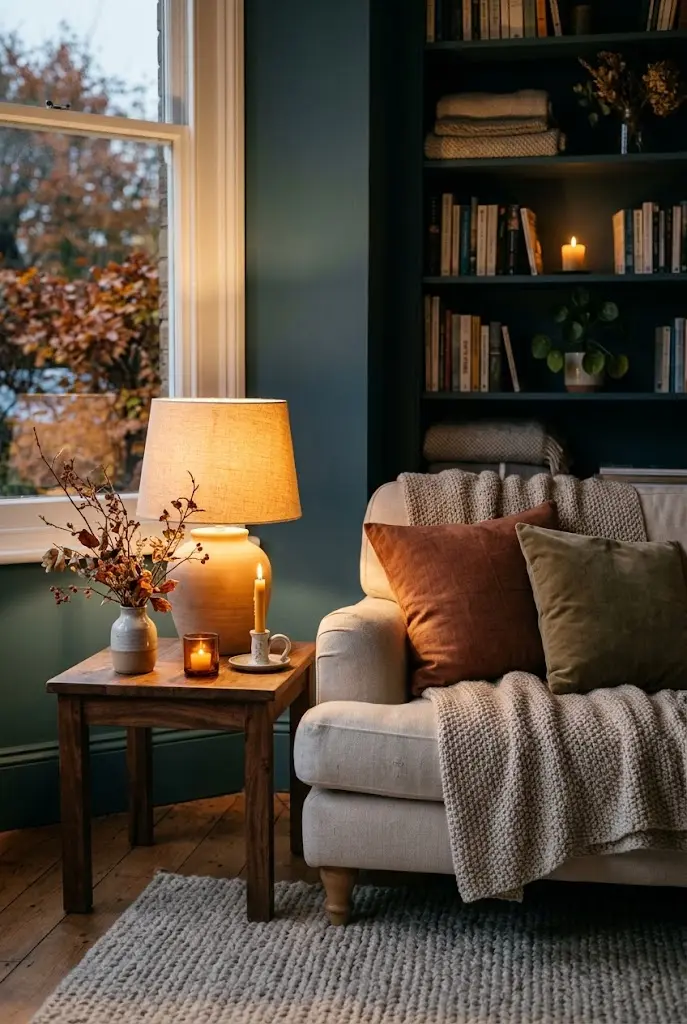
Lighting can have a major effect on how a room feels during autumn evenings. Rather than relying entirely on bright overhead lights, introduce a few softer light sources that create a more relaxed atmosphere.
Place a table lamp beside the sofa, add a floor lamp to a reading corner, or use warm-toned accent lighting on a console. Combining several light sources at different heights can make a room feel more layered and comfortable.
Candles can also contribute to the atmosphere. Choose simple glass holders, ceramic candle vessels, or understated brass candlesticks that complement your existing decor.
For everyday convenience, realistic flameless candles offer an alternative where an open flame would be impractical. With real candles, follow the product’s safety instructions and keep flames away from curtains, foliage, fabrics, and other combustible materials.
Styling tip: Warm lighting tends to complement autumn colors such as rust, brown, olive, and cream.
17. Make a Harvest-Inspired Centerpiece With Seasonal Produce
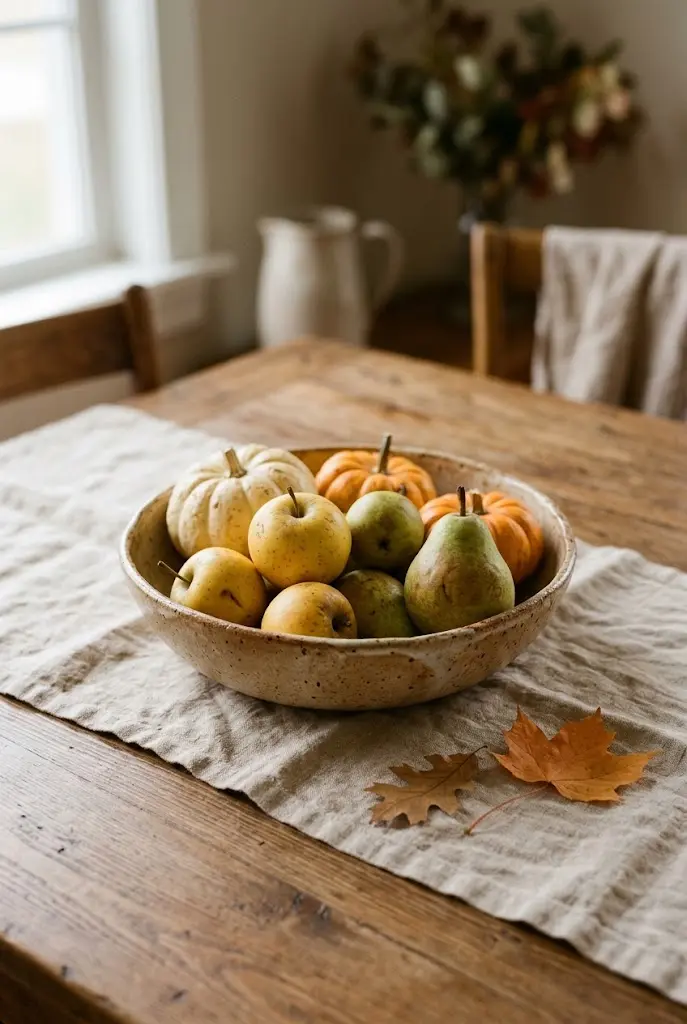
Fresh produce can become an attractive part of your fall decor, especially when arranged in a bowl or low centerpiece. Apples, pears, small pumpkins, and gourds introduce natural color and variation without requiring specialized decorative accessories.
Choose a wide ceramic bowl, a wooden tray, or a shallow woven basket as the base. Arrange the produce loosely, mixing shapes and colors rather than stacking everything into a uniform pyramid.
For a more refined arrangement, combine green pears, golden apples, and a few small cream pumpkins. A traditional harvest display might instead use red apples, orange gourds, and warm brown leaves.
This approach works particularly well on dining tables, kitchen islands, and sideboards. Because the produce is edible, it can be replaced as needed instead of becoming another collection of items that must be stored after the season.
Keep fresh produce away from direct heat and inspect it regularly so the display remains clean and attractive.
18. Introduce Dark Wood and Earthy Natural Materials
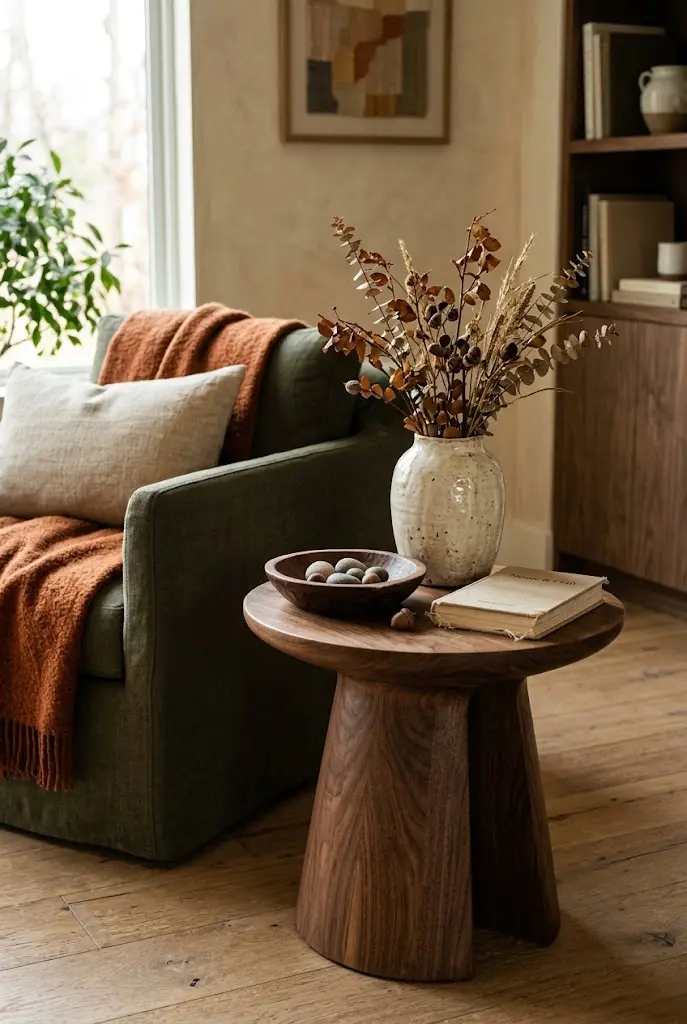
Autumn decor isn’t only about seasonal accessories. Changing the balance of materials in a room can also make it feel warmer and more grounded.
Dark walnut, smoked oak, aged wood finishes, woven fibers, and textured ceramics all work well with autumn’s earthy palette. You can introduce these materials through a side table, a picture frame, a decorative bowl, or a small accent piece.
If your room already has light furniture, a darker wooden accessory can create contrast without making the space feel heavy. In a room with dark flooring and furniture, lighter ceramics or cream textiles can provide balance.
You don’t need to replace existing furniture to achieve this look. Even a wooden tray on a coffee table or a natural bowl on a console can introduce the desired material contrast.
The most successful arrangements mix finishes thoughtfully rather than matching every wooden object exactly.
19. Create a Cozy Reading Nook With Autumn Layers
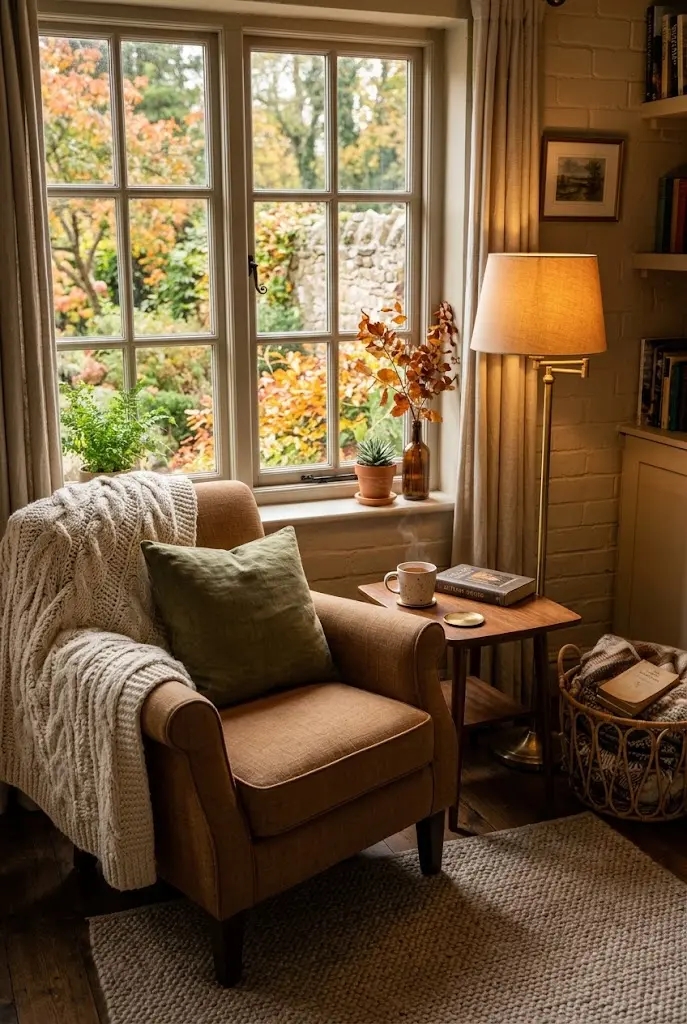
A reading nook is a practical way to bring the feeling of fall into a smaller part of your home. You don’t need a dedicated library; an unused corner, a bedroom window, or a quiet space beside a bookcase can work just as well.
Begin with a comfortable chair that supports your preferred reading position. Add a soft throw, one or two cushions, and a small side table for a book or drink.
A floor lamp or an adjustable reading light provides focused illumination, while a small rug can help define the area. Introduce fall color through textiles rather than purchasing an entirely new set of furniture.
For a compact space, choose a side table with a small footprint and keep the walking path clear. In a larger corner, a low bookcase or woven basket can provide convenient storage.
The best reading nook is one that feels comfortable enough to use every day, not simply attractive in photographs.
20. Style Your Dining Room With Rich Burgundy and Olive Green

Burgundy and olive green offer a deeper, more sophisticated alternative to a traditional orange-and-yellow autumn palette. These colors work especially well in dining rooms, where textiles, wood furniture, and warm lighting can create an intimate atmosphere.
Introduce burgundy through linen napkins, a table runner, upholstered dining chairs, or a small floral arrangement. Use olive green in foliage, cushions on an adjacent bench, or ceramic accessories.
Natural wood provides a grounding element that connects the two colors. Cream dinnerware and clear glassware can keep the arrangement from becoming too dark.
If you have a small dining room, use the deeper shades as accents rather than covering every surface in rich colors. In a larger room, burgundy upholstery or a darker wall color can create a more dramatic effect.
The aim is to build a balanced palette that feels warm and intentional throughout the season.
21. Decorate With Neutral Fall Accents for a Modern Look

If bright orange pumpkins and bold autumn patterns don’t suit your home, neutral fall decor offers a quieter alternative. Cream, beige, taupe, soft brown, and muted green can create a seasonal atmosphere without competing with a minimalist or contemporary interior.
Choose pumpkins in ivory, pale green, and soft gray-green. Pair them with natural wood, textured ceramics, linen, and understated dried foliage.
A simple arrangement on a console or coffee table can be enough. For example, place two neutral pumpkins beside a handmade ceramic vase and a small wooden bowl. Repeat a similar color or material elsewhere in the room to create a visual connection.
Neutral decor is particularly useful when you want your seasonal accents to work with your existing furnishings. The effect comes from texture, shape, and material contrast rather than bright colors.
Common mistake: Making every item the same shade of beige.
Better approach: Mix warm ivory, natural wood, muted green, and different tactile finishes to give the arrangement depth.