

Fall changes how a kitchen is used. Mornings start a little darker, soups simmer longer, and the counter becomes a place to linger rather than rush through. Fall kitchen decor works best when it supports that slower rhythm — warm color, soft texture, and practical pieces that are already part of cooking, rather than decorations that get in the way.
The ideas below focus on that balance. Some take five minutes, like swapping a towel or filling a bowl with apples. Others are small weekend upgrades, like changing lighting or hardware. All of them are meant for real American kitchens — apartments, rentals, older homes, and busy family spaces included — and each one can be adjusted to suit the room you already have.
1. Layer Warm Textiles on Chairs, Counters, and the Oven Door
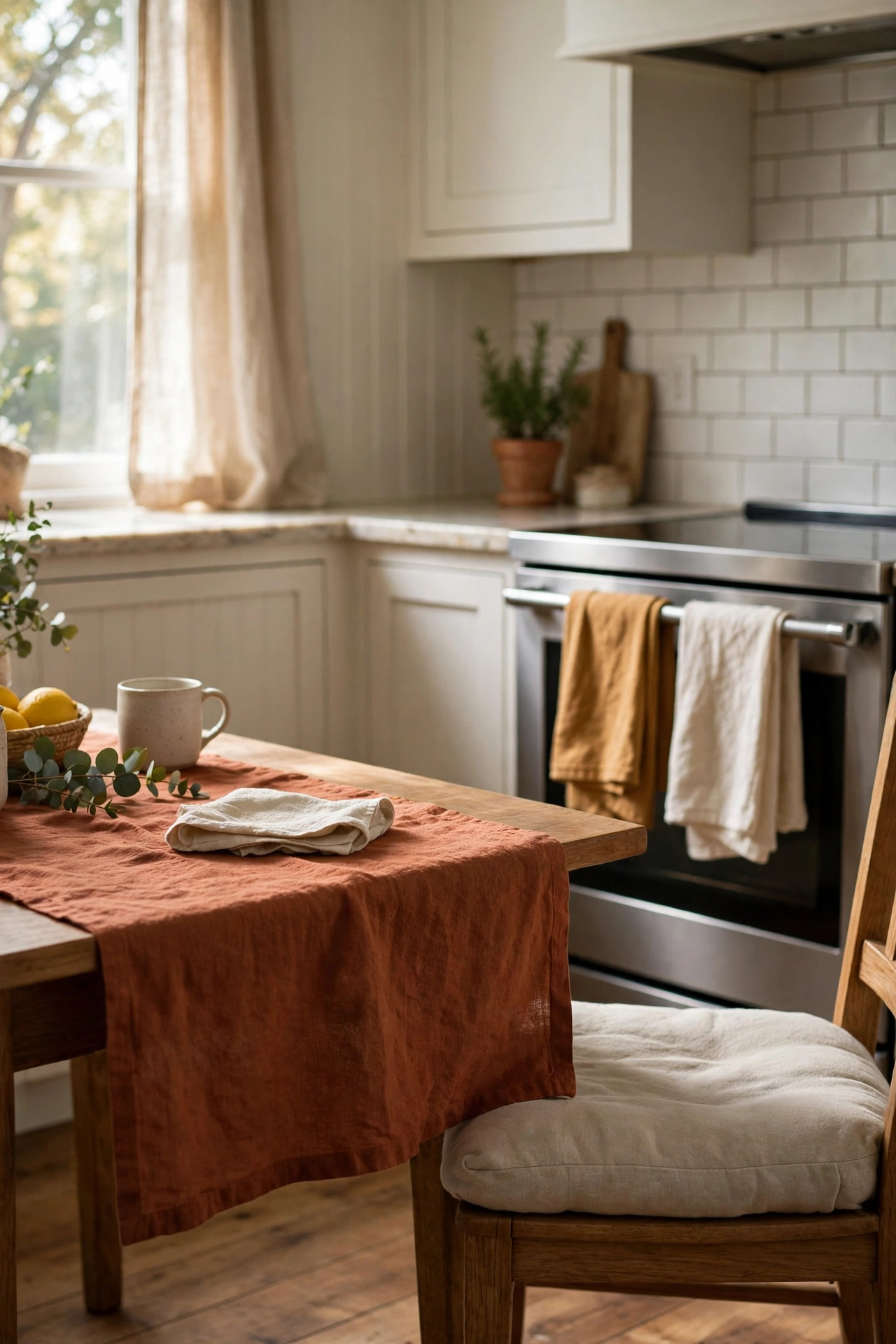
Textiles are the fastest way to change the temperature of a room without changing anything permanent. A linen table runner in rust or warm ochre, a couple of thick cotton dish towels, and a cushion on a kitchen chair can make white cabinets and stainless steel feel noticeably softer. The trick is restraint: choose two warm tones and one pattern, such as a simple stripe or small check, then repeat them in small doses rather than covering every surface.
In practice, this works best when the fabrics can actually be used. Keep the prettiest towel on the oven handle, put a washable runner where it will not sit under a cutting board, and choose chair cushions with ties so they stay put during a busy breakfast. If the kitchen already has a strong countertop pattern, lean toward solid colors; if the room is mostly plain, a plaid or woven texture adds just enough interest.
2. Style One Open Shelf as a Small Autumn Vignette
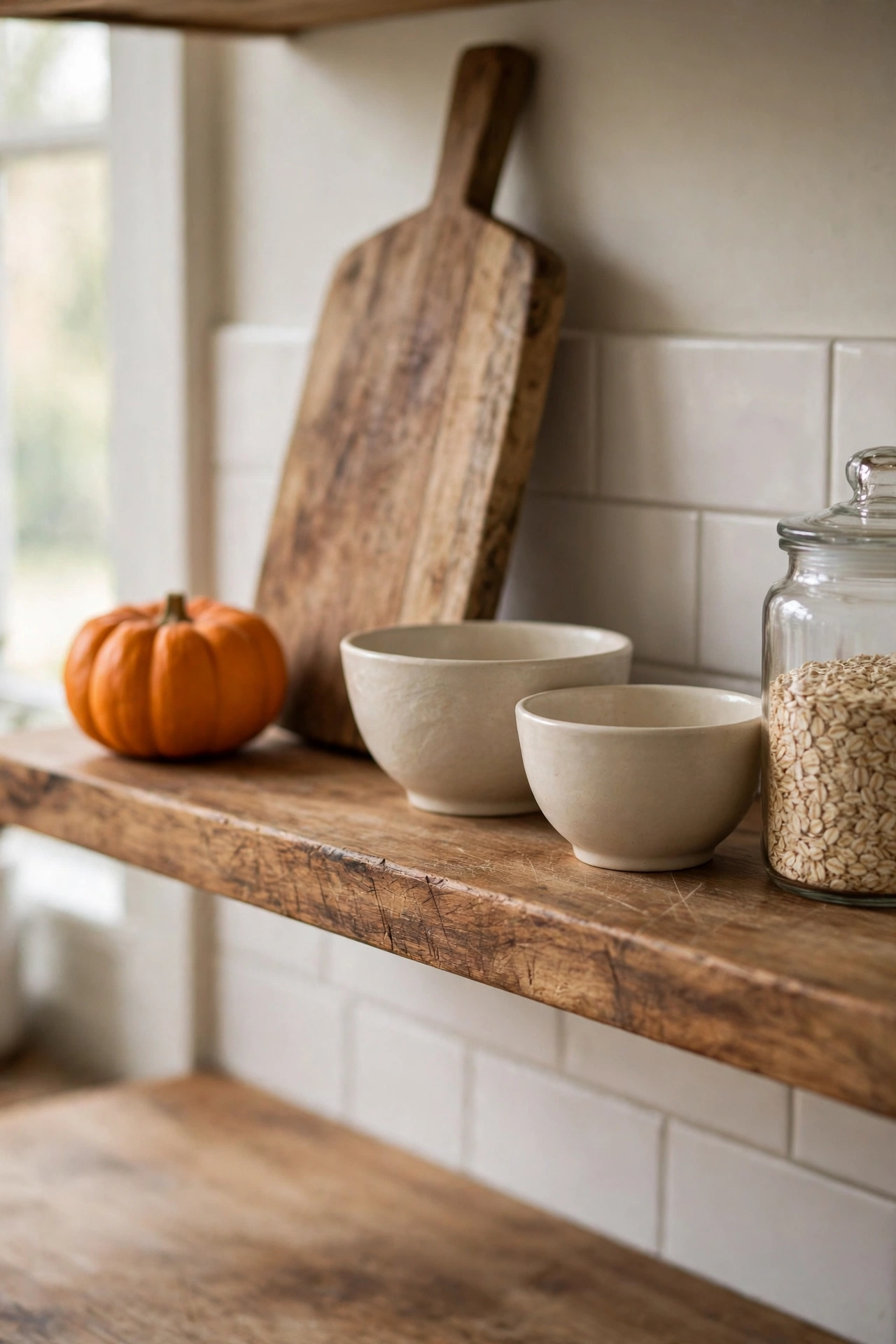
Instead of decorating every shelf, pick one that is easy to reach and easy to change. A short stack of cream stoneware bowls, a wooden serving board leaned upright, a small pumpkin, and a jar of dried beans or oats can read as seasonal without looking staged. The height variation matters more than the number of objects: something tall at the back, something low in front, and a little breathing room between groups.
Quick Tip: Step back and squint at the shelf. If it reads as one calm shape rather than a row of separate items, the grouping is working. If one color jumps out, swap it for a quieter tone.
3. Let Copper Cookware Do Double Duty
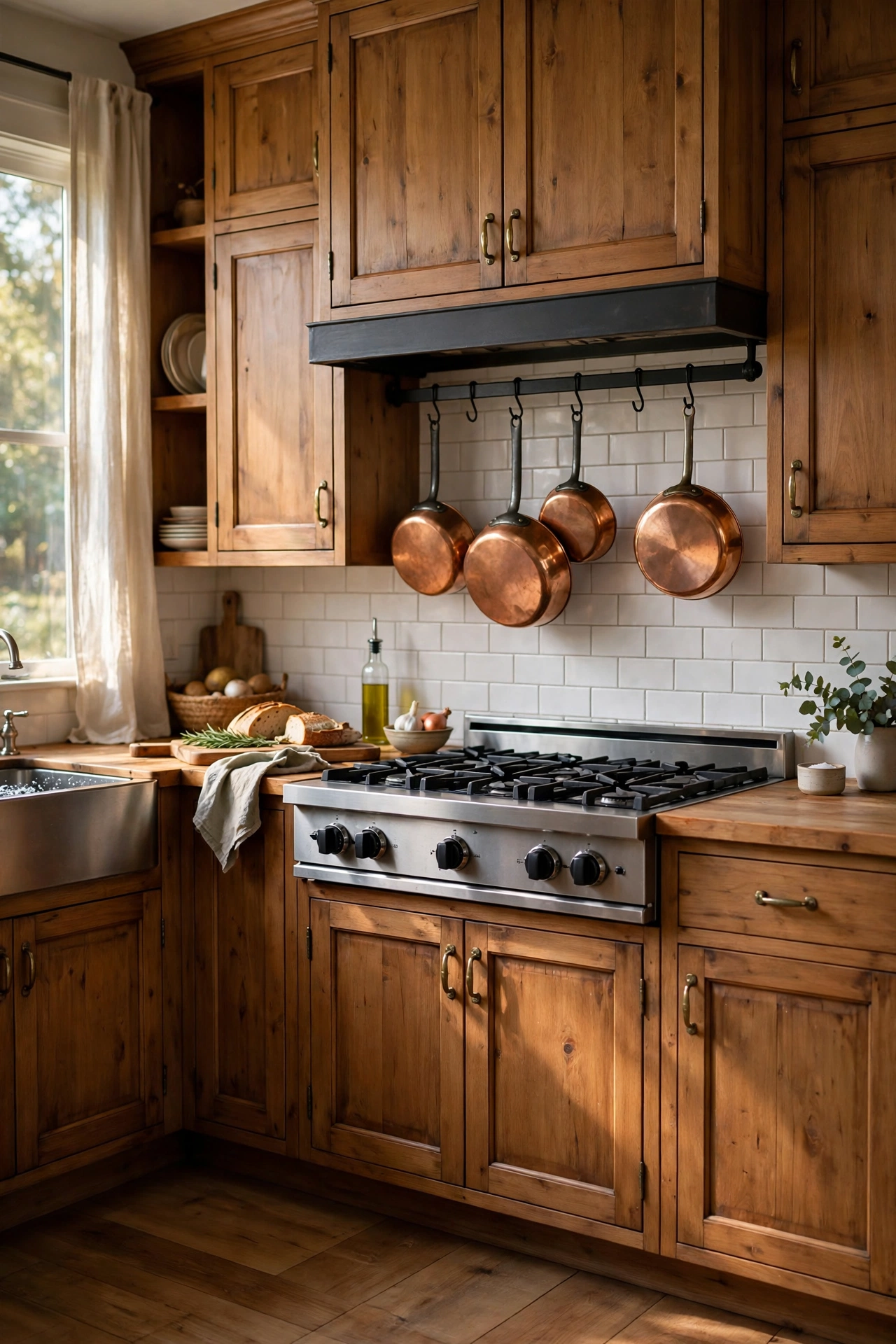
Copper brings instant warmth to a kitchen because its color sits naturally beside wood, cream, and deep green. A hanging rail, a wall-mounted rack, or simply two or three well-used pans on a shelf can become both storage and decoration. This idea works especially well in smaller kitchens, where closed cabinets hide useful pieces and open wall space is underused.
Before hanging anything heavy, check that the rail and wall anchors are rated for the weight, and keep the most-used pan at hand height. Pans that are only for show tend to gather dust; pans that are actually cooked with will develop a lived-in patina, which suits a fall kitchen far better than a perfectly polished display.
4. Set Up a Dedicated Coffee and Cider Corner
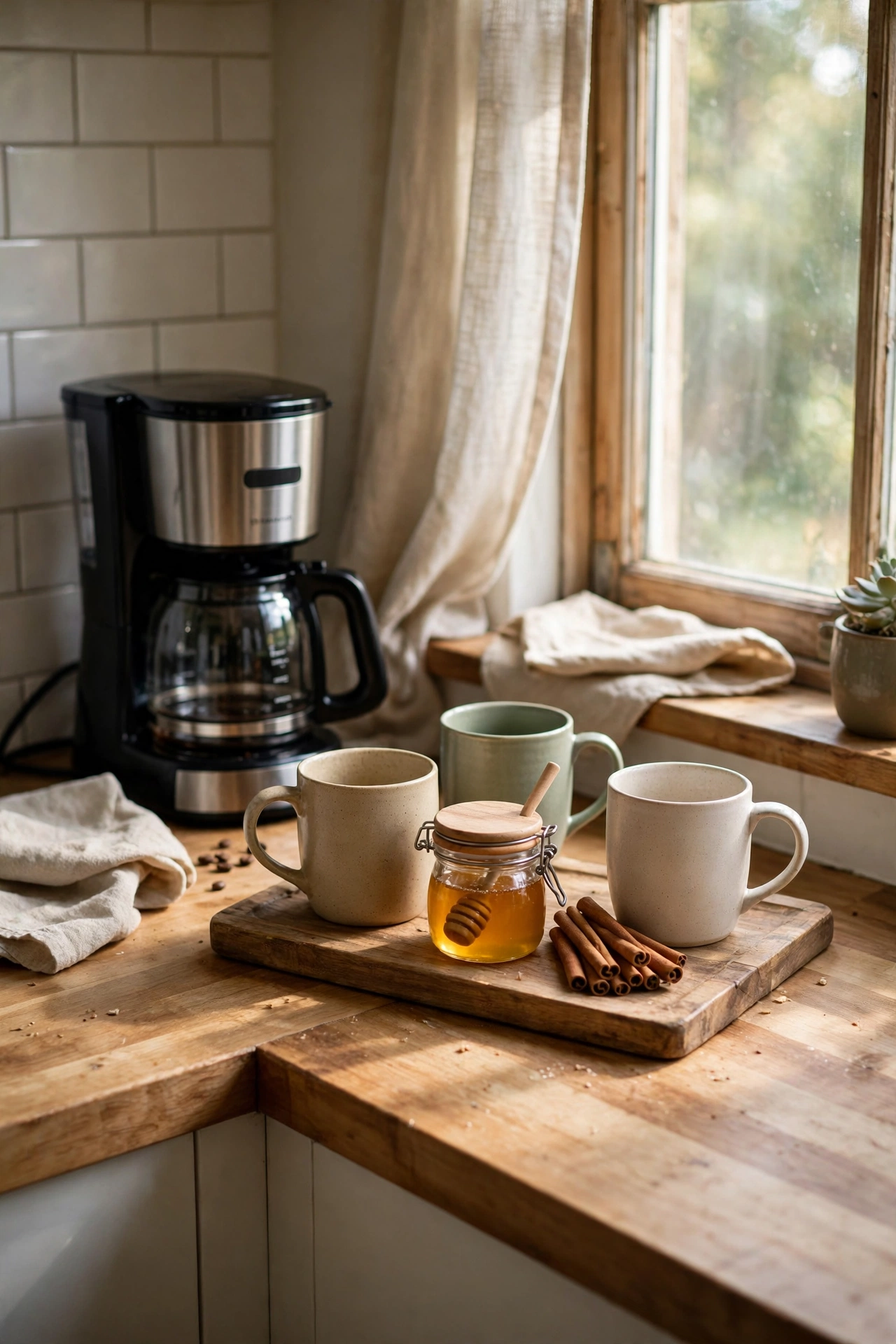
A small, defined drink station makes fall mornings feel intentional, even in a compact kitchen. It does not need a separate cart. A tray on one end of the counter can hold mugs, a French press or coffee maker, cinnamon sticks, honey, and a small jar of tea. In the evening, the same spot can switch to cider: swap in a kettle, a few mugs, and a bowl of orange slices or star anise for garnish.
The practical advantage is containment. When everything for one routine lives in one place, the rest of the counter stays clear for cooking. Choose a tray with a lip so spills stay put, and keep the station away from the main prep zone so someone making coffee is not standing in the cook’s way.
5. Build a Low Island Centerpiece That Does Not Block Conversation
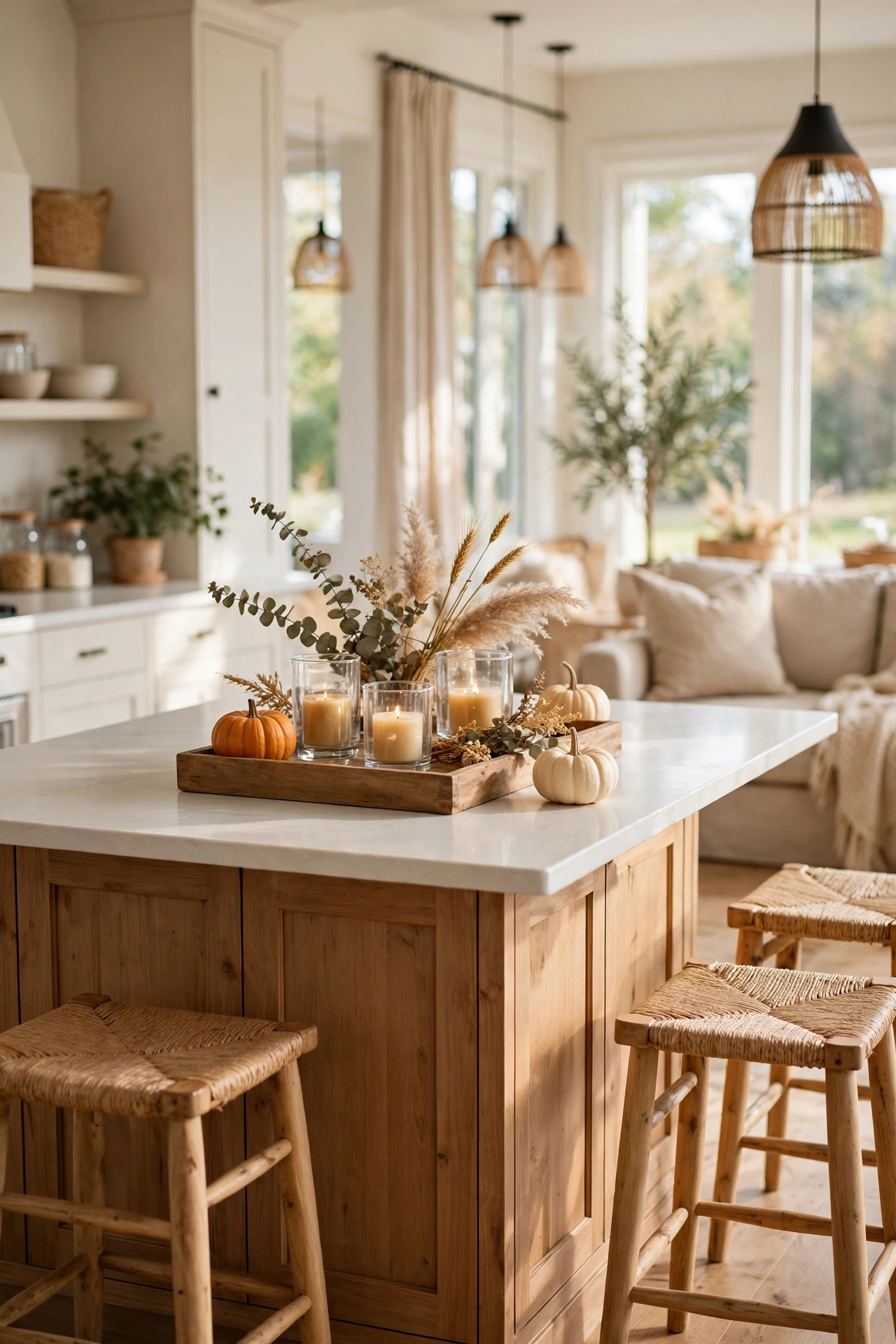
A kitchen island centerpiece should be enjoyed from every side, not just photographed from one angle. Keep it low and long: a wooden tray or runner, a few pillar candles in glass holders, dried eucalyptus or wheat stems laid flat rather than standing tall, and one or two small pumpkins. Because nothing rises above eye level, people can still talk across the island while chopping, doing homework, or setting out dinner.
- Tray first: It defines the display and makes it easy to move for a big cooking project.
- Candlelight second: Glass holders protect the surface and soften the glow.
- Natural texture last: Dried stems, a linen napkin, or a small wooden bowl adds warmth without clutter.
Common Mistake: Building a tall floral arrangement in the middle of a working island.
Better Approach: Use height at the ends of the island, or on a sideboard, and keep the center low and clear.
6. Lean Wooden Boards Against the Backsplash
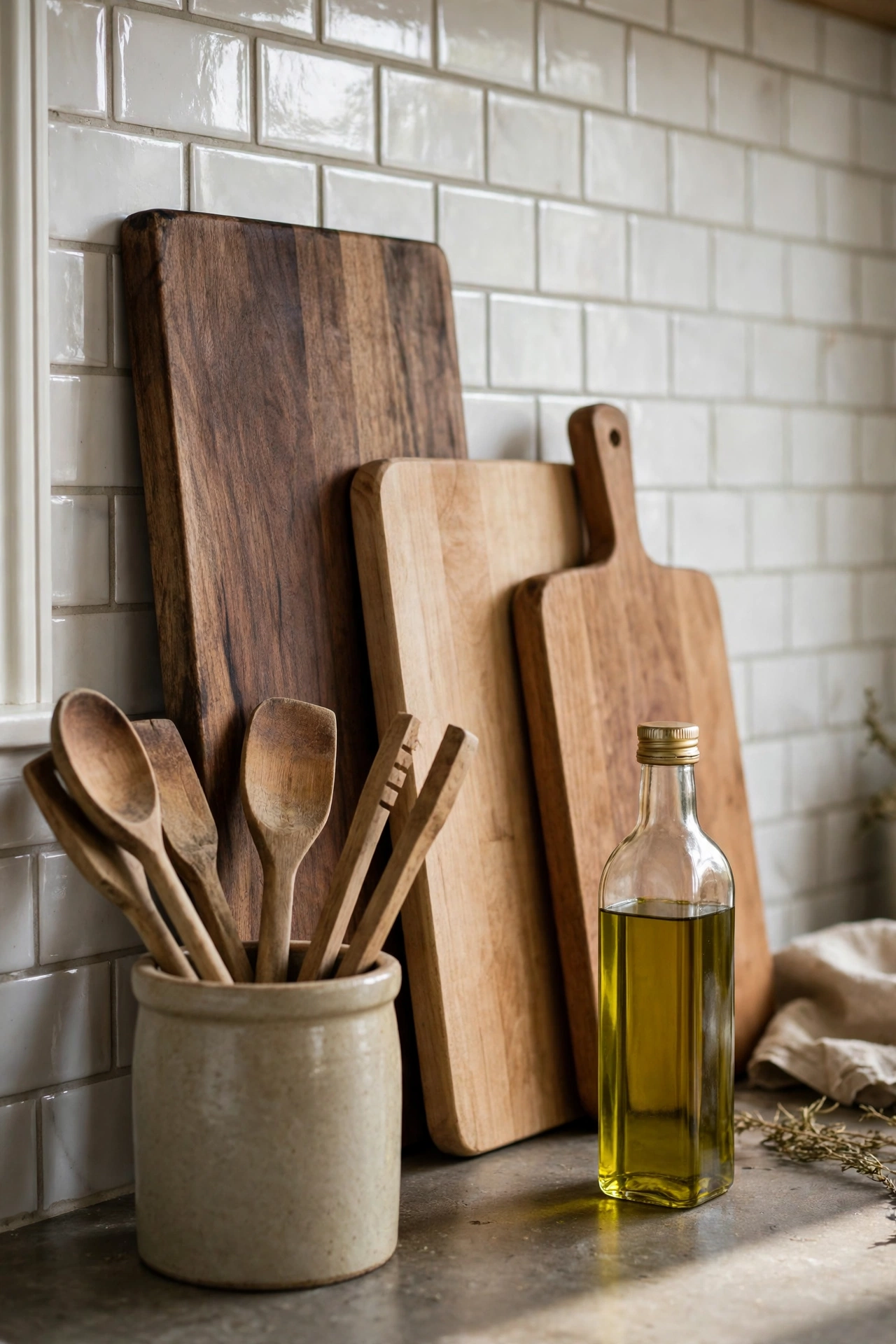
Wood is one of the simplest ways to warm up a kitchen dominated by tile, stone, or stainless steel. Lean two or three cutting boards of different sizes and tones against the backsplash, with the largest at the back and a round board in front. Add a small crock of wooden spoons or a jar of olive oil to one side so the grouping looks useful rather than purely decorative.
This is a renter-friendly idea because nothing needs to be hung or drilled. In a small kitchen, one beautiful board is enough; in a larger one, a small collection can fill an empty stretch of counter without taking over the prep space. Wipe boards down after use and avoid leaning them where they will constantly get splashed by the sink.
7. Layer the Lighting for Darker Fall Evenings
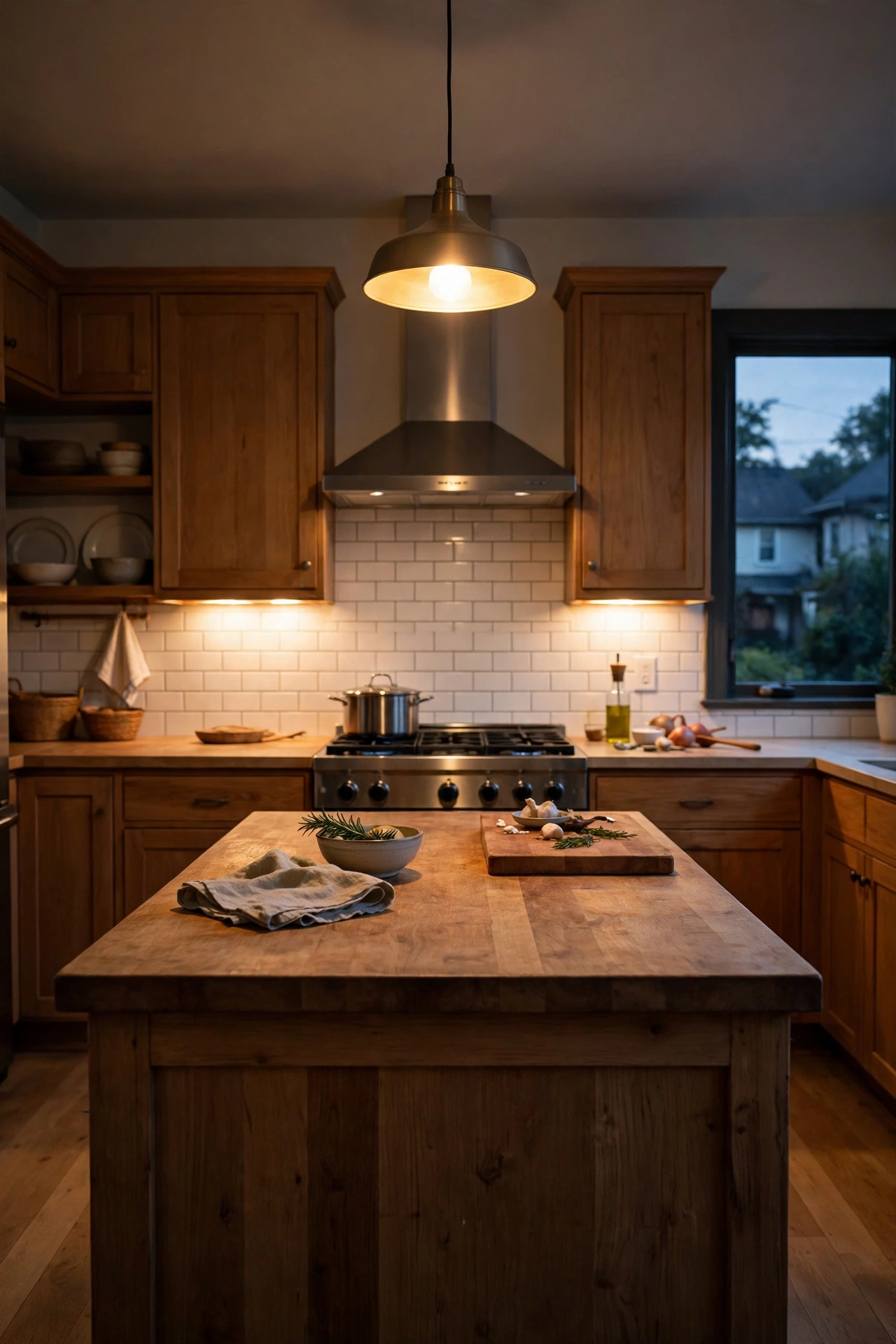
Fall kitchens often suffer from a single harsh overhead light. Layering solves that without a remodel: keep the main ceiling light for cooking, add warm under-cabinet lighting for the counter, and use a pendant, lamp, or candles for the softer evening glow. When the layers can be dimmed or switched separately, the same room can move from bright prep mode to a calm dinner mode in seconds.
| Layer | What It Does | Best Place |
|---|---|---|
| Task lighting | Lights the work surface clearly | Under cabinets, over the island |
| Ambient lighting | Softens the whole room | Ceiling fixture on a dimmer |
| Accent glow | Adds warmth and depth | Pendant, small lamp, or candles |
The visual balance usually improves when the warmest light is also the lowest — at counter or table height — rather than coming only from above. Avoid placing candles near curtains, towels, or anything that could catch, and keep cords out of walkways.
8. Fill a Bowl With Seasonal Produce You Will Actually Eat
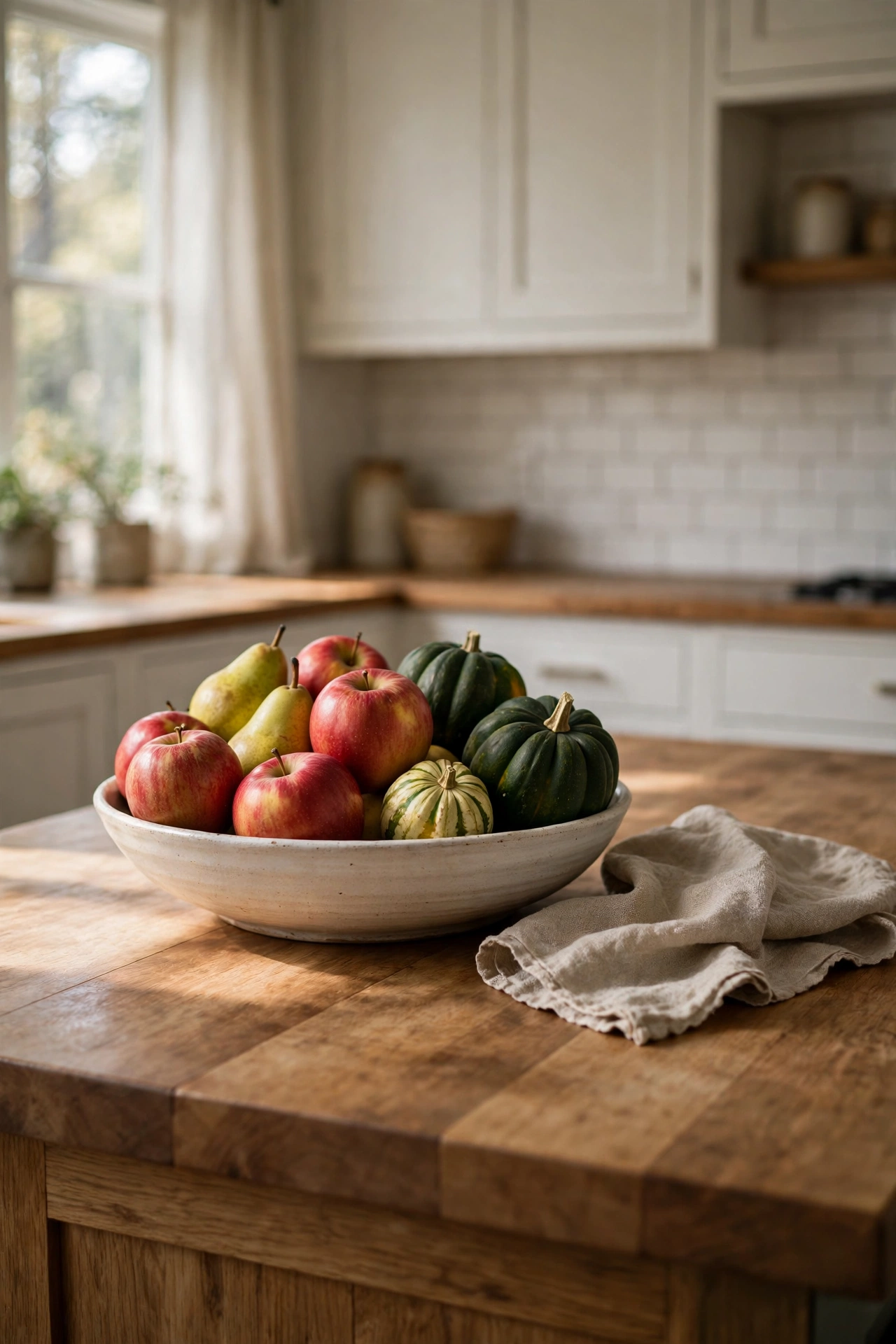
Few fall decorations look as natural as food itself. A wide, shallow bowl of apples, small squash, and a few pears instantly signals the season, and unlike a purely decorative display, it gets used. Place it where it is visible but not in the main chopping zone — the end of an island, a side counter, or a breakfast table works well.
Choose produce with varied shapes and a limited palette: deep red apples, a pale green squash, and one orange pumpkin, for example, read as seasonal without looking like a grocery display. Check the bowl every few days, move the ripest fruit to the front, and replace anything soft. A bowl that is half-eaten and refreshed looks far more inviting than one that sits untouched for weeks.
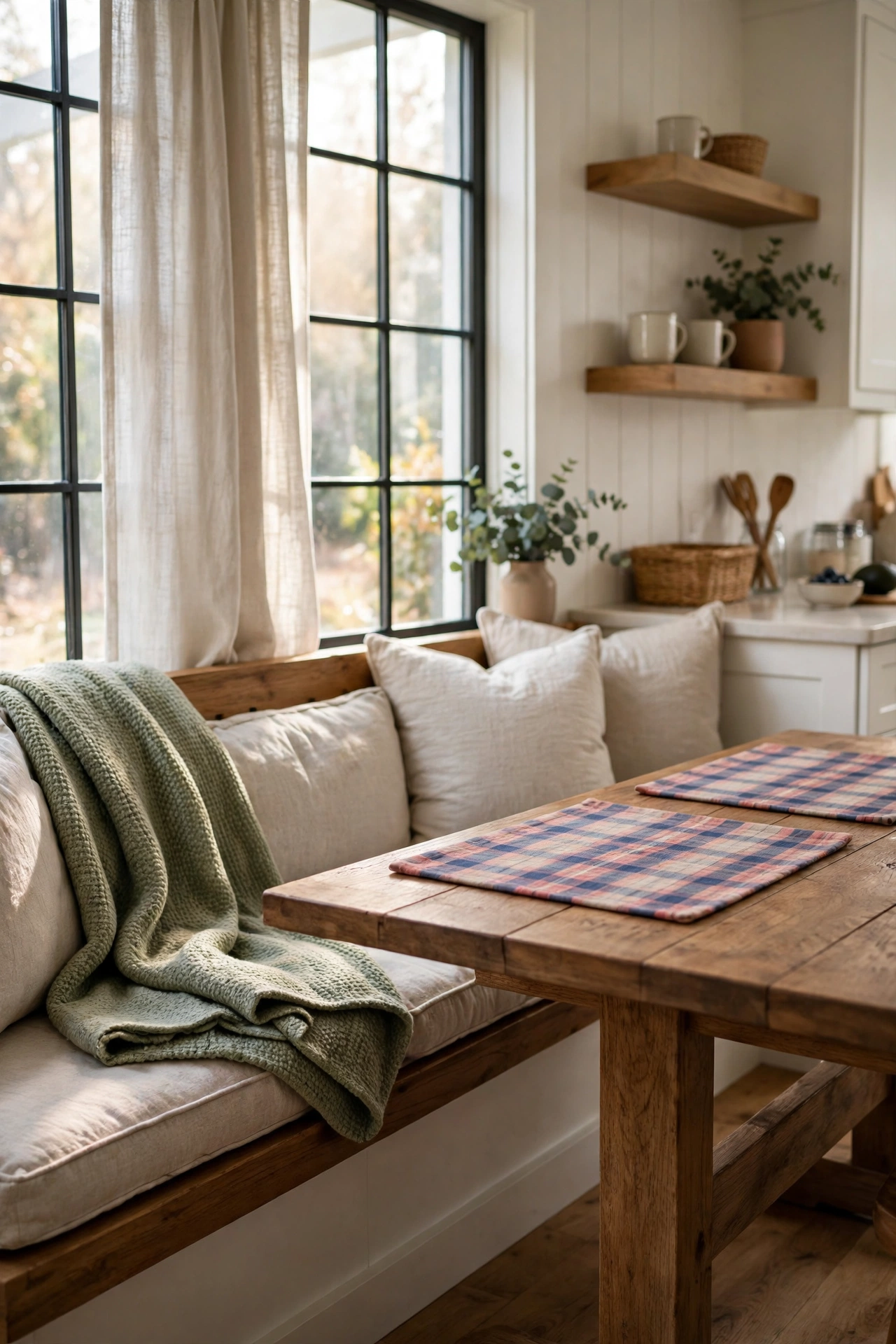
9. Dress the Breakfast Nook in Plaid and Soft Layers
A breakfast nook is where fall decor earns its keep: it is the spot for slow weekend mornings, school-day breakfasts, and cups of tea after dinner. A plaid tablecloth or placemats, a bench cushion in a warm solid, and a small throw folded over the back of a chair can make the corner feel like a separate, sheltered room. Keep the table itself fairly clear so there is still space for plates, books, and a vase of branches.
For everyday use, choose washable fabrics and a pattern scale that suits the space — a large plaid can overwhelm a tiny nook, while a small check keeps it calm. If the nook has a window, let daylight do most of the work and avoid heavy curtains that block it.
Best For: Family breakfasts, small apartments with a table nook, and rental kitchens
Investment: Accessible
Visual Effect: Sheltered, warm, and casual rather than formal
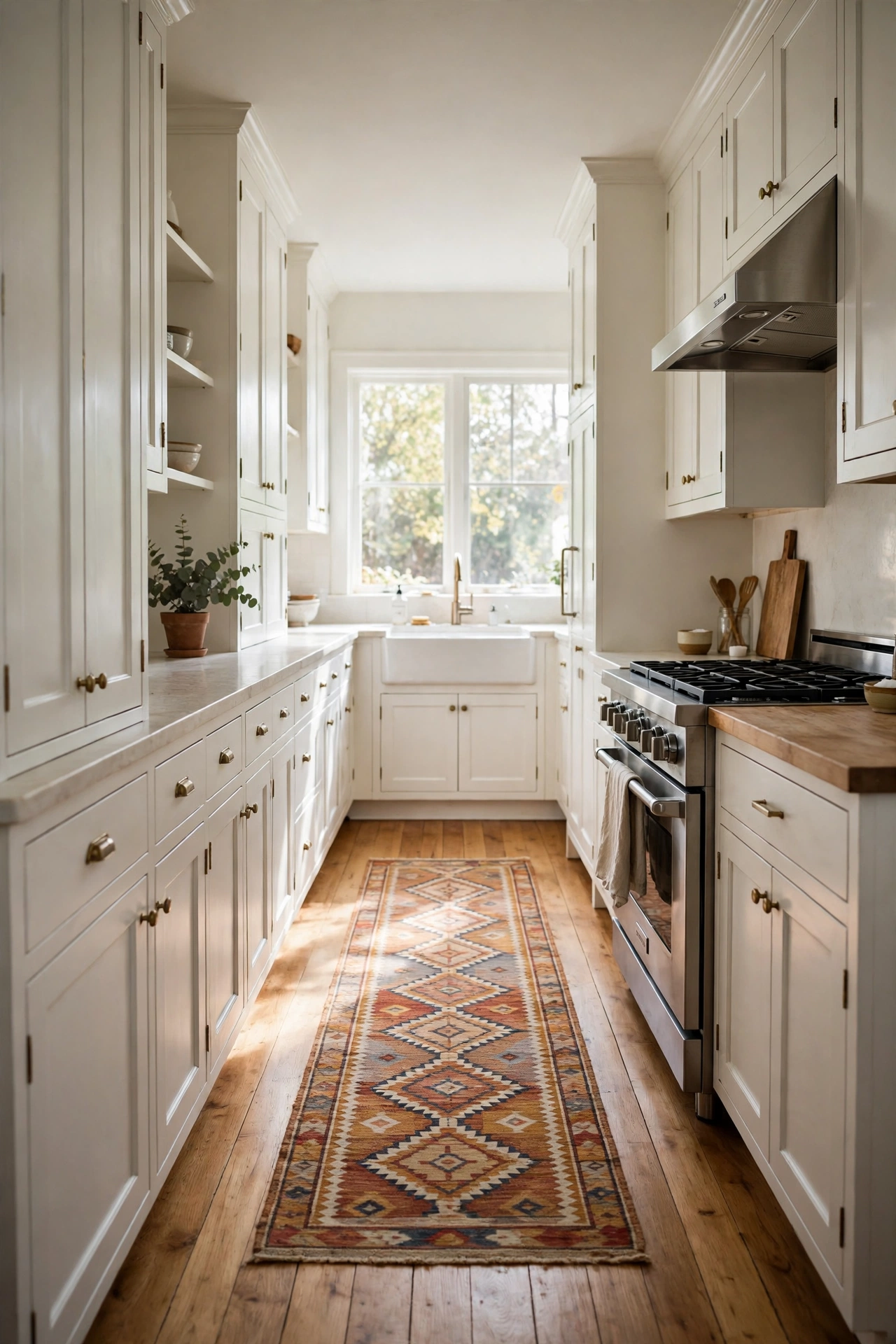
10. Roll Out a Warm Patterned Runner
Kitchen floors are often cold and hard, and fall is when that becomes most noticeable. A flat-weave runner in a warm pattern — think muted terracotta, ochre, and cream — adds color at floor level, softens footsteps, and visually connects the sink, stove, and island. Because the eye travels along the runner, it can also make a galley kitchen feel longer and more intentional.
Measure before buying: the runner should sit flat, leave a little floor visible on each side, and never curl up at a doorway or under a stool leg. A low pile and a non-slip pad underneath are more important than a thick, plush rug in a room where spills happen. Choose a washable option if the kitchen sees daily cooking, pets, or children.
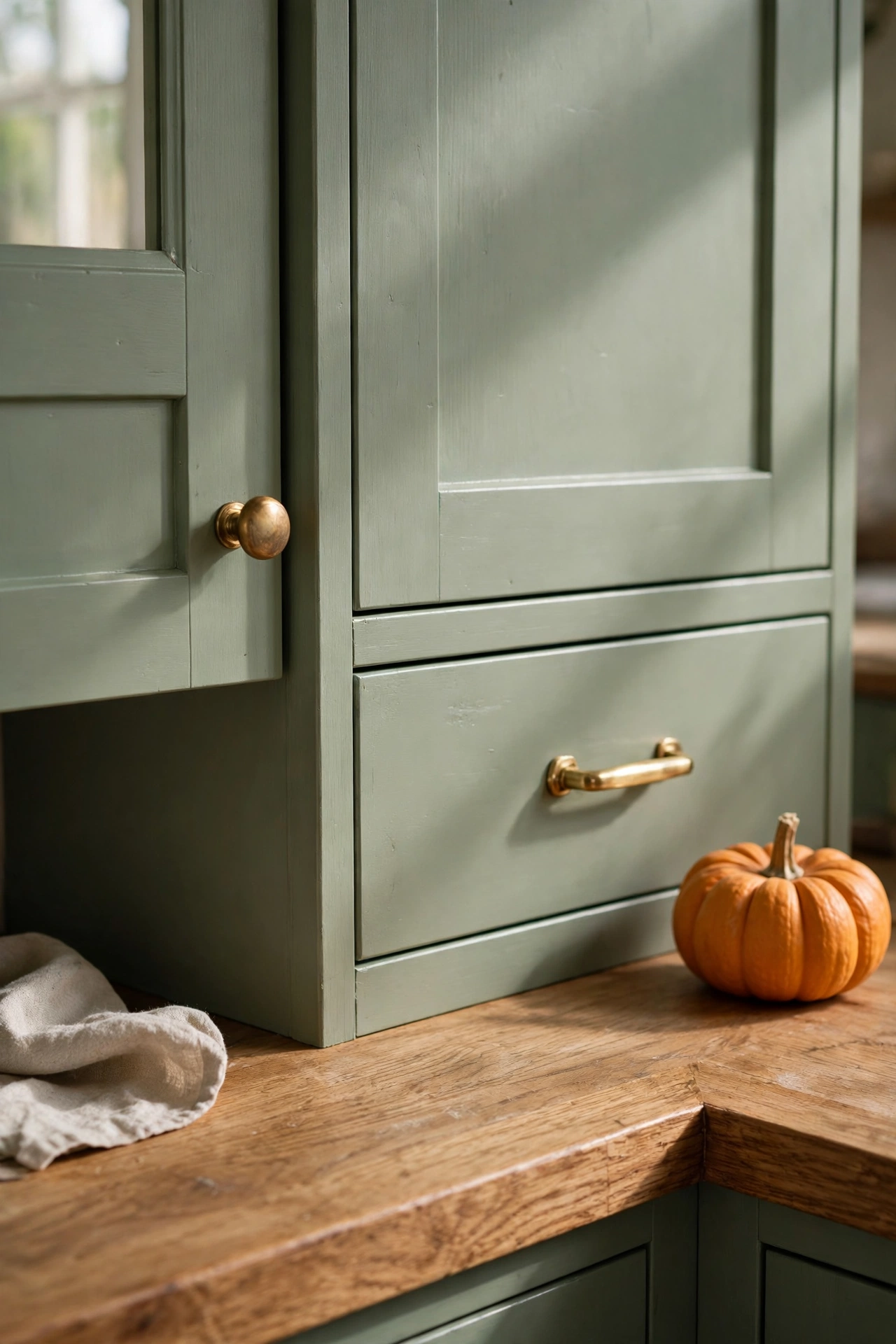
11. Swap in Warm Metal Hardware for a Small Weekend Upgrade
Changing cabinet knobs and pulls is one of the few upgrades that can shift a whole kitchen’s mood in an afternoon. Warm brass, brushed bronze, or aged copper tones pair naturally with fall colors and soften the look of plain white or sage cabinets. The change is also reversible, which makes it a sensible option for renters who keep the original hardware to reinstall later.
- Remove one knob and take it to the store, or measure the distance between screw holes for pulls.
- Test one new piece on a frequently used cabinet before committing to the whole kitchen.
- Replace the rest in batches, keeping screws and old hardware together in a labeled bag.
Editor’s Note: Scale matters more than finish. A tiny knob on a wide drawer front will look lost, while an oversized pull on a small cabinet door can feel clumsy. Match the hardware length to the drawer or door it serves.
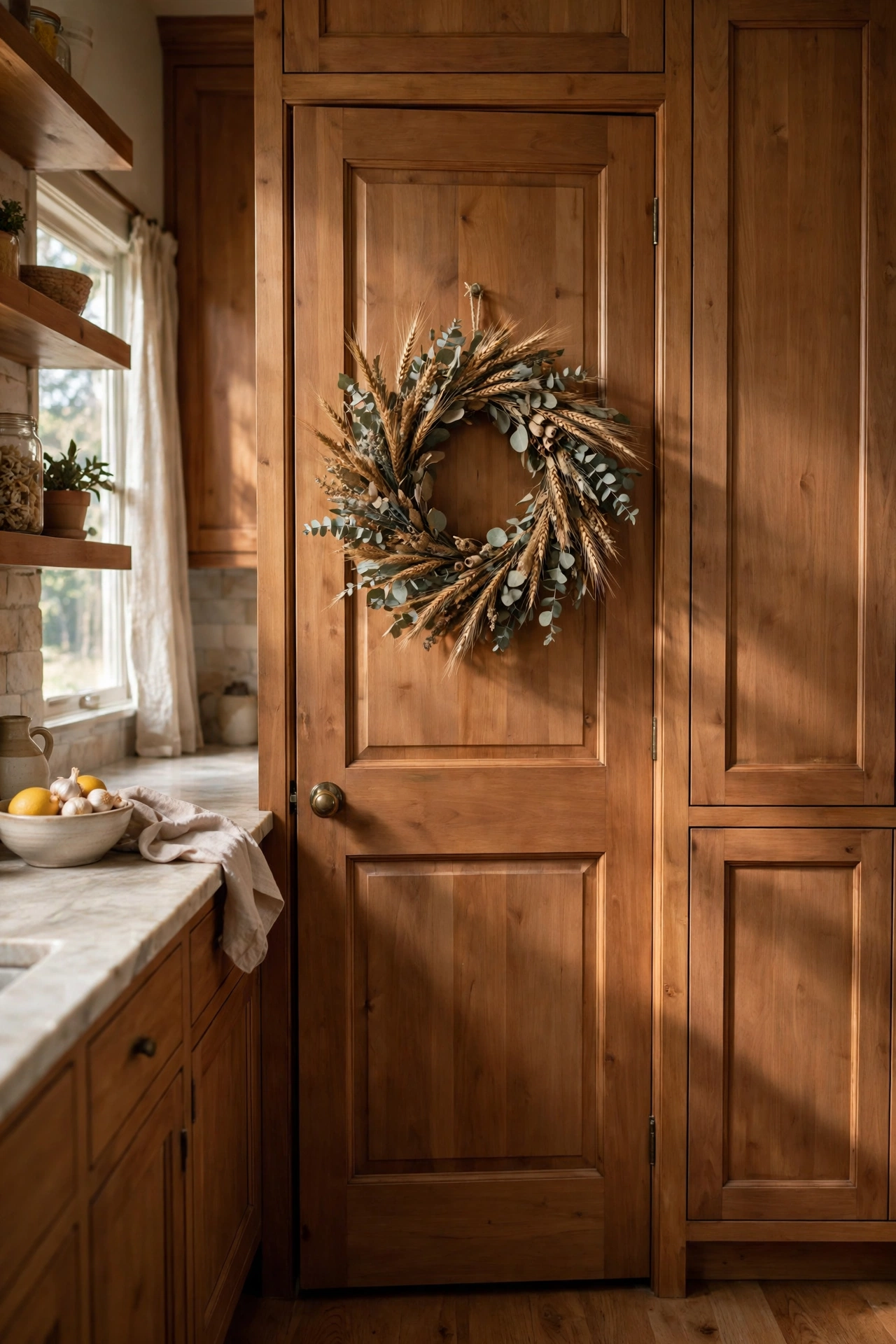
12. Hang a Simple Wreath Where It Will Be Seen, Not in the Way
A fall wreath does not have to live on the front door. In the kitchen, it works beautifully on a pantry door, the side of a tall cabinet, or above a range hood — places where it is visible from the table but will not drip, shed, or interfere with cooking. Dried wheat, eucalyptus, small pinecones, and a few preserved leaves give texture without the maintenance of fresh flowers.
Keep the wreath flat against the surface and away from direct heat. Over a stove, steam and grease will shorten its life; on a pantry door, it stays clean and can be enjoyed every time someone reaches for a snack. One wreath is usually enough in a kitchen — a second one can quickly tip the room from seasonal to crowded.
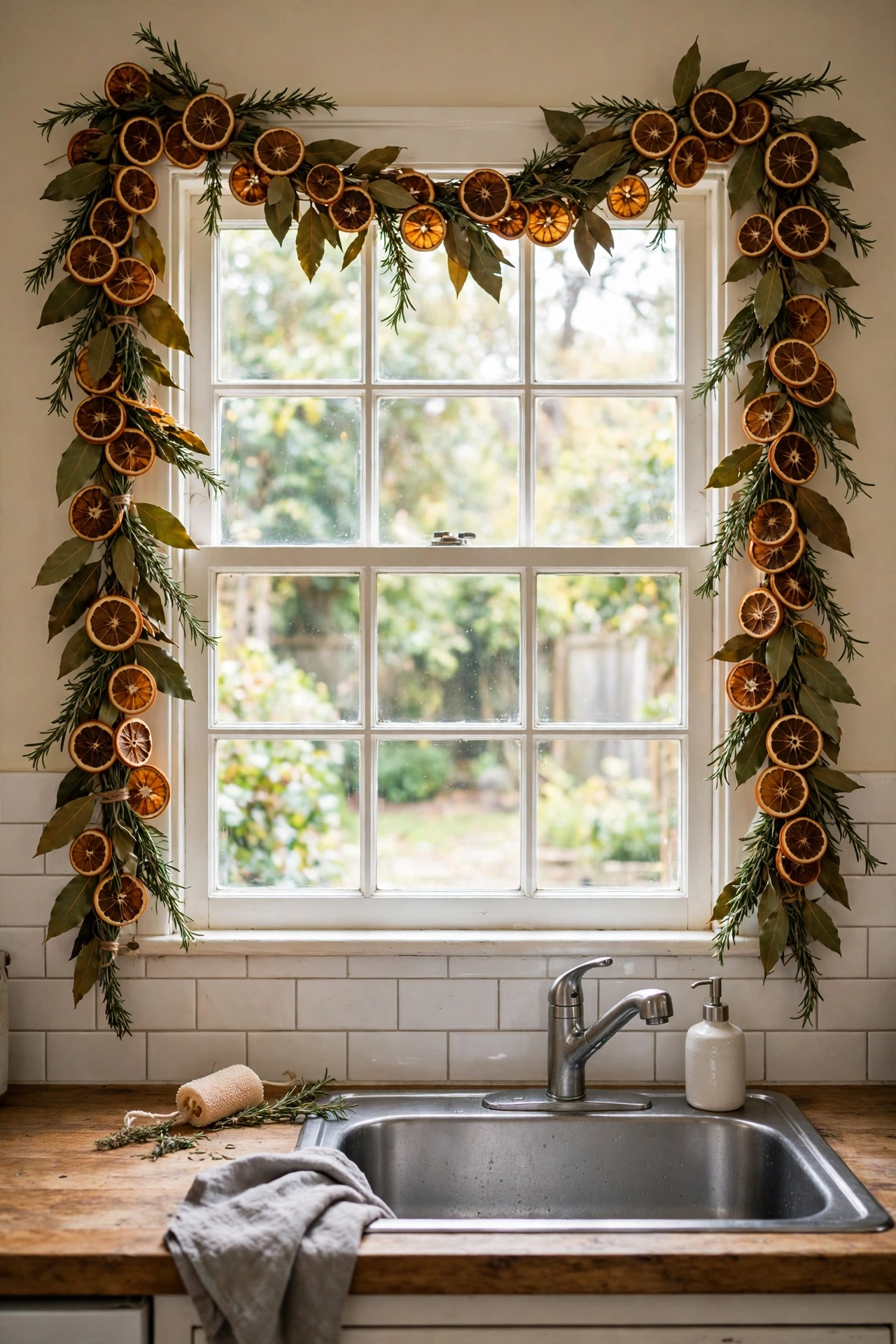
13. Drape a Dried-Orange and Herb Garland Over a Window or Doorway
For a kitchen that already has wreaths and pumpkins elsewhere, a garland offers a different shape: long, horizontal, and a little rustic. Dried orange slices, bay leaves, cinnamon sticks, and small sprigs of rosemary strung together can drape over a window frame, along a doorway, or across the top of open shelving. The scent is subtle, the colors are naturally warm, and the materials are inexpensive.
Hang it where it will not swing into a walkway or hang over a burner. A doorway between the kitchen and dining room is often ideal because it frames the transition between cooking and eating. If the garland starts to look dusty, it can be taken down, refreshed with a few new orange slices, and rehung — no special storage needed.
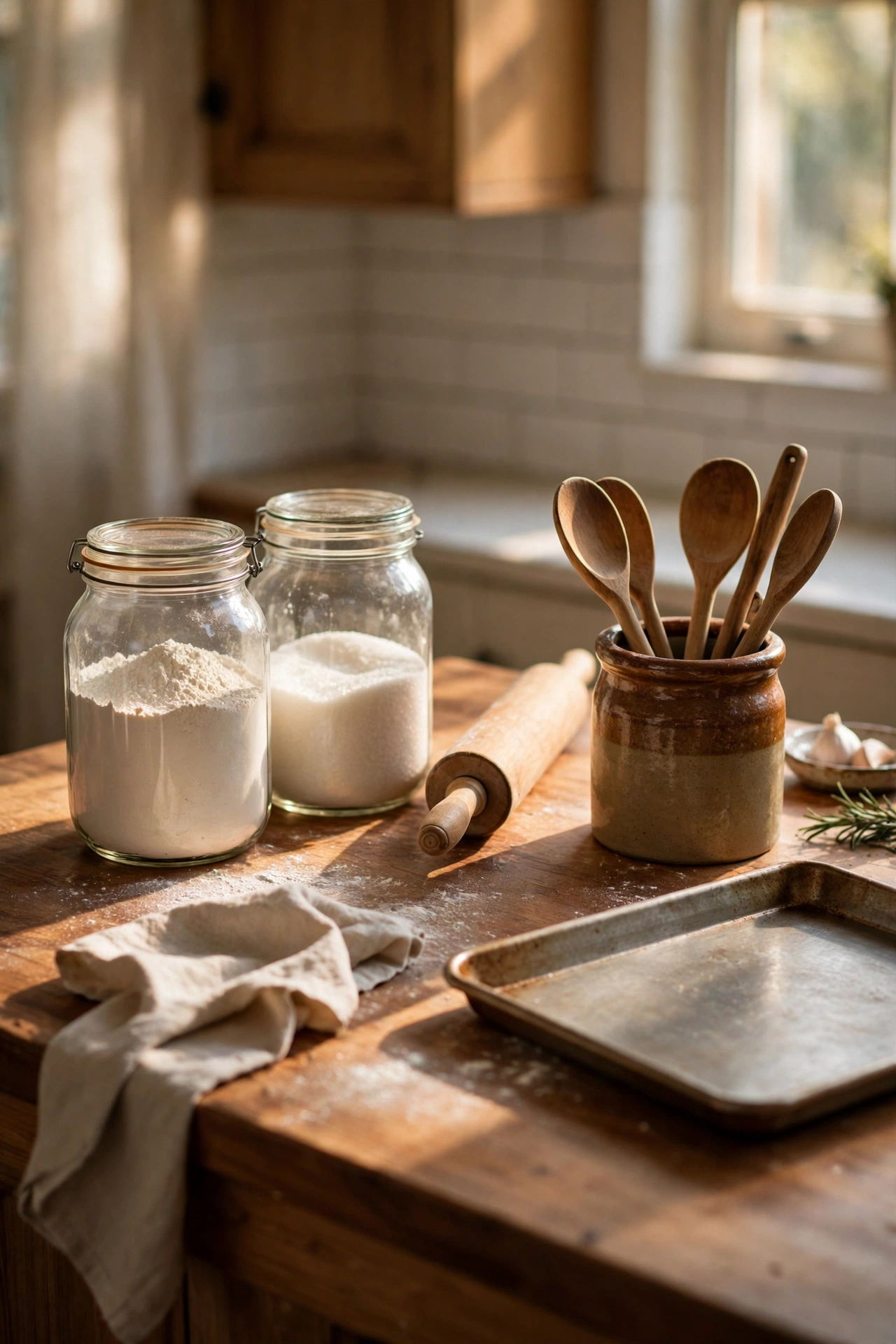
14. Create a Cozy Corner for Baking and Slow Weekends
Fall baking — pies, muffins, bread, and cookies — deserves a corner that makes the work feel enjoyable rather than chaotic. Dedicate one stretch of counter, or a small rolling cart, to the tools used most: flour and sugar in clear jars, a wooden spoon crock, a marble or wooden rolling surface, and a stack of baking sheets stored upright nearby. When everything is within reach, a baking afternoon starts faster and ends with less cleanup.
Do keep the baking corner separate from the everyday prep zone if space allows, so a half-finished pie does not block dinner. Don’t fill the corner with single-use gadgets that are rarely touched; a few reliable basics, stored neatly, look better and work better than a crowded collection.
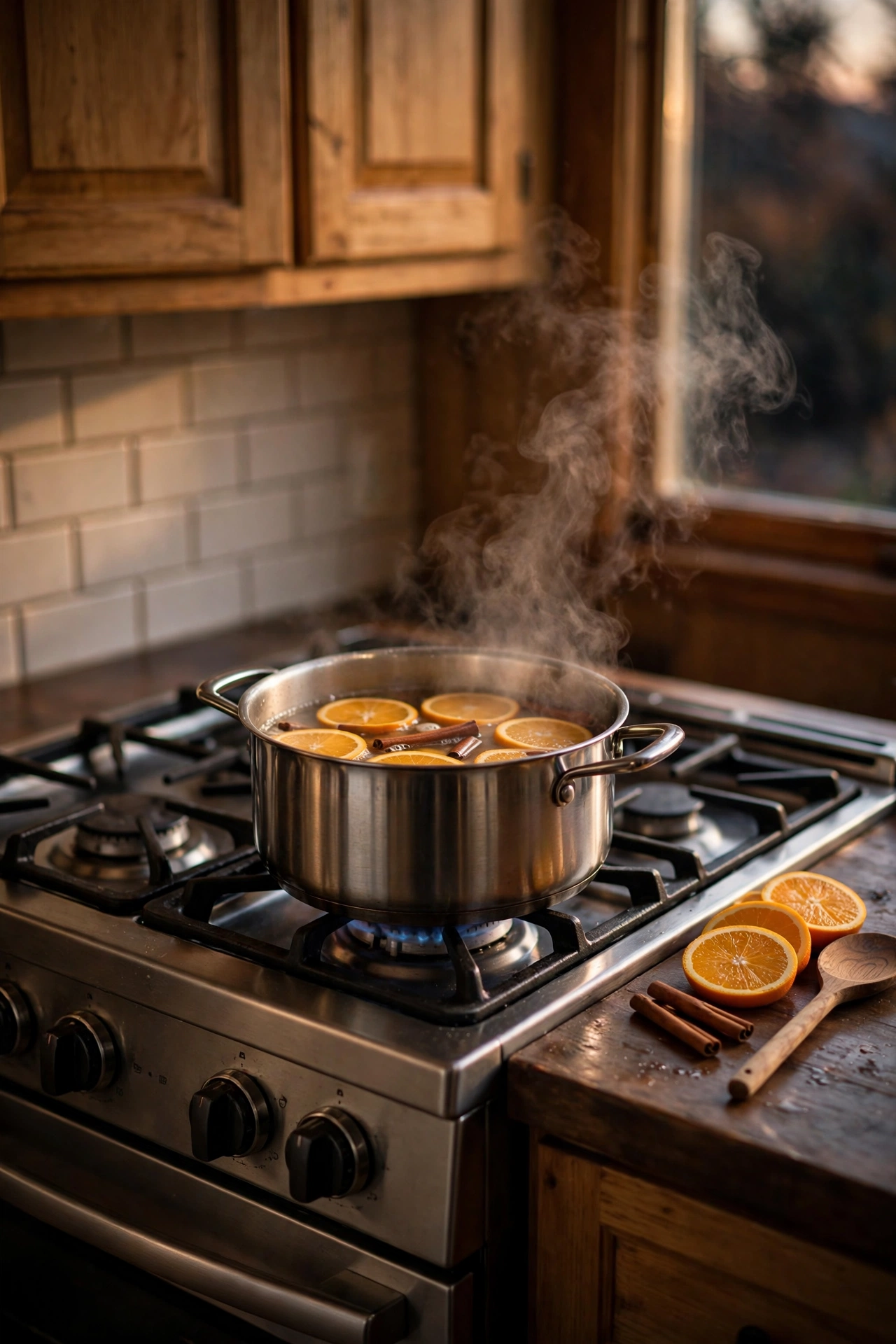
15. Let a Simmer Pot Bring Scent and Steam to the Stove
The most inviting fall kitchen detail is often the one you notice before you see it. A pot of water gently simmering with orange peel, cinnamon sticks, cloves, and a few apple slices fills the room with a warm, natural scent and adds a soft steam to the air on a cool day. It is also a useful way to use up citrus peels and apple cores that would otherwise be discarded.
Set the pot on low, keep the lid slightly ajar, and check the water level every 30 minutes or so, topping it up as needed. Never leave a simmer pot unattended for long periods, and turn it off before leaving the house. For a quieter version, the same ingredients can go in a slow cooker on low with the lid vented — a good option when the stove is needed for cooking.
Where to Start
If the list feels long, start with the change that matches how the kitchen is actually used. For busy weeknights, textiles, a produce bowl, and layered lighting make the biggest difference for the least effort. For a weekend project, hardware, a drink station, or a baking corner will reward the time spent. And for a home that already feels close to finished, one wreath, one garland, or one low centerpiece is often enough — fall decor works best when the kitchen still feels like a kitchen, just a warmer one.